
Did you know that the average American spends about two hours a week looking for lost items? This occurs in cluttered homes. This fact shows the benefits of organizing small spaces efficiently.
This guide is here to help you make the most of small spaces. It will make your home feel bigger, work better, and reduce stress. It’s handy whether you’re in an apartment, tiny house, or just have a small room needing better storage.
Here are simple steps to follow: look over your space, declutter, use walls for storage, and find furniture that serves multiple purposes. Choose the right containers and follow our tips for each room. We’ll also talk about habits to keep your space clean and tools that make storage easy.
By following this guide, you’ll see great results. You’ll have more floor space, cleaning becomes easier, your home will look calm, and your daily routines will improve. Before doing anything else, measure your space, grab some boxes and labels, and make a small change today. Begin to take back your living space now.
Understanding the Challenges of Small Spaces
Living in a small space has its ups and downs. It means less cleaning and lower expenses. But, you have to deal with limited room, less storage, and less flexibility. Good organization can help you fully use every inch and keep things running smoothly.
Common Issues You Might Face
Fitting furniture in tight spots can be tough. Big couches or tables often don’t work in small apartments. It helps to pick narrow furniture or pieces that can change shape to keep walkways clear.
Lots of small homes and old apartments come without enough storage. People use boxes and open shelves when there’s no closet space, which can clutter your view. And when things get cluttered, rooms feel even tinier.
It’s common for a little room to have many uses. You might eat, sleep, and work in one space. So, look for storage and furniture that can adapt to what you need at any moment.
Reaching items in tall cabinets or high shelves can be a stretch. Bad design can slow you down. Place things you use a lot where you can easily grab them.
When money is tight, big changes aren’t always an option. Look for small, affordable ways to better use space. A few simple tweaks can really change how a room works, without a huge cost.
Importance of Organization
Being organized makes a space more useful by making storage work harder. Clearing clutter and using clever systems can make shelves and closets hold more. This makes your room feel and actually be more spacious.
Staying organized saves time. It means less searching, quicker cleanups, and smoother daily routines. These little bits of saved time add up.
A tidy space helps keep your mind clear and lowers stress. An organized home lets you focus, relax, and entertain without stress.
Storing things right means they last longer. Whether it’s clothes, gadgets, or cookware, correct storage cuts down on the need to replace items. This saves money in the long run.
To tackle the problems of living in a small space, try these ideas. Clear out clutter, pick furniture that works in various ways, and put storage within easy reach. These steps can make a big difference fast.
Assessing Your Space
Before getting new storage or changing furniture, calmly look at your room. Understanding your space helps use small areas well. It lets you pick the best storage solutions for your needs.
First, grab some easy tools: a tape measure, a notepad or notes app, and a camera or smartphone. You might also use a laser measure. Write down every measurement to plan with actual sizes.
Measuring Dimensions
Find the room’s length, width, and ceiling height. Check the space around doors and windows, closet depth, and any alcoves. Note the size of your furniture to see what fits or needs to go.
Remember to consider door swing and walking areas in your plan. Spaces with little walking can be for narrow storage. High ceilings let you use loft beds, tall shelves, or hanging storage. So, ceiling height is important for organizing small areas.
Make a quick, accurate drawing. Use graph paper or apps like RoomSketcher or MagicPlan. A to-scale sketch helps you decide where tall storage goes and where it works best.
Identifying Key Areas for Organization
First handle areas you use every day: the entry, kitchen, bathroom, bedroom, and work space. Making these better gives quick, noticeable improvements.
Spot places that often get messy: dresser tops, kitchen counters, bathroom surfaces, and behind doors. These spots usually need specific storage to stay neat.
Find areas you don’t use much, like under the bed, above cabinets, in stair risers, and narrow spaces between appliances. Multi-use furniture can make these spots useful for storage. This helps organize areas for sleeping, working, and having fun.
| What to Measure | Why It Matters | Action |
|---|---|---|
| Room length & width | Determines usable floor area for furniture and pathways | Sketch to scale and place large items first |
| Ceiling height | Allows vertical solutions like tall shelving or loft beds | Plan for stacked storage and wall-mounted units |
| Door/window clearances | Prevents blocking openings and ensures flow | Measure swing radius and mark on floor plan |
| Furniture footprints | Shows what fits and what can be replaced | Decide keep, replace, or reconfigure items |
| Hidden nooks & underused areas | Reveal spots for added small space storage | List compatible storage options by size |
| Clutter hotspots | Identifies daily problem areas that need solutions | Assign targeted storage or routines |
Decluttering Before You Organize
Begin by clearing off surfaces and sorting things to see what you have. Quickly go through counters, entryways, and drawers. This lets you figure out what to keep and plan for storage.
Organize in short, focused periods to prevent getting tired. Use a timer, work from 15 to 60 minutes on one area at a time. This makes decisions easier and keeps you going strong.
Tips for Effective Decluttering
Prepare four boxes or bags: for keeping, donating or selling, recycling, and throwing away. Label them and move things out fast to stop second-guessing. If unsure, think if you’ve used the item in the last year or if it can go digital.
Look into selling or donating items. Use sites like Facebook Marketplace or eBay to sell, and donate to Goodwill or The Salvation Army. This prevents things from coming back into your space.
Make clear rules for deciding what stays. Keep one good version of items, turn paper into digital files to save space, and keep mementos in one box. This helps keep your space tidy over time.
Keeping Only What You Need
Doing a seasonal sweep helps manage clothes. Store or give away off-season or unworn items. Choosing fewer, versatile clothes makes laundry easier.
Get rid of duplicates and prefer items that serve many purposes. A single durable pan or a multi-tool can replace several items. This reduces clutter by needing fewer places to store things.
Turn important papers digital and store them online with services like Google Drive. Keep special items in just one spot. This way, you can keep what’s important and still stay organized.
| Action | Why It Helps | Quick Tip |
|---|---|---|
| Time-box sessions | Prevents decision fatigue and keeps progress steady | Use a 30-minute timer and one task per session |
| Four-box method | Creates clear outcomes for each item | Label boxes and remove donate/sell items within 48 hours |
| Digitize paperwork | Reduces physical clutter and improves access | Scan receipts and store in Google Drive folders |
| Seasonal triage | Keeps wardrobes streamlined and usable | Rotate clothing twice a year and donate unused items |
| Consolidate duplicates | Frees up storage space quickly | Keep one well-used version of tools and gadgets |
Maximizing Vertical Space
When you don’t have much floor space, look up. Using vertical space smartly saves room and organizes your home well. It keeps things neat and easy to reach.
Using Shelving Units
Floating shelves add a light, airy feel to a room. Put them at eye level for things you use often. Items used less can go above doorways, keeping paths clear.
Tall, slim bookcases or ladder shelves are great for using height. IKEA’s BILLY bookcase or ladder shelves are good, affordable choices. They make the most of small areas without taking up floor space.
Built-in shelves or niches make spaces like hallways and living rooms look neat. Even shallow shelves make a big difference for things like media or pantry items, freeing up the floor.
Adjustable shelves from Elfa or ClosetMaid adapt to your changing needs. They can be rearranged for seasonal items or kitchen gadgets, making storage flexible.
Always anchor tall shelves for safety, especially if you have kids or pets. This prevents tipping, which is an important safety measure.
Installing Hooks and Racks
Wall hooks in the entryway save closet space and keep essentials ready. A neat row of hooks streamlines going in or out.
Over-the-door hooks or racks maximize unused space on door backs. For stability, use heavy-duty hooks or Command hooks for lighter items in rental homes.
In the kitchen, use wall rails or magnetic strips to free up cabinets. The Container Store offers magnetic strips and pegboards for utensils and cookware, keeping counters tidy.
Choose screwed hooks for heavy items since adhesive ones can’t hold as much. In closets, adding double rods or hanging organizers boosts hanging space. This is a key part of using vertical space well.
Creative Storage Solutions
Smart storage changes how you live in a small place. Try using multi-functional pieces and clever accessories. They organize small spaces and keep things stylish and comfortable. These options are great for both renters and homeowners. They want to make the most of small spaces without big changes.
Multi-Functional Furniture
Pick sofas with hidden storage, ottomans, and tables that lift to hide blankets and games. West Elm and IKEA have great choices like BRIMNES and MALM. They make organizing small spaces easier.
Murphy beds or wall beds save space in studio apartments. They are provided by companies like Murphy Bed Depot. This helps keep your small apartment open during the day.
Modular systems from Lovesac and IKEA can change based on your needs. Make sure to measure so everything fits. This ensures your furniture will last a long time.
Under-Bed Storage Options
Rolling bins or flat plastic boxes are perfect for storing seasonal clothes and bedding. Clear containers let you see inside. Fabric bins are gentle on delicate items.
Bed risers create more room for storage under your bed. Check weight limits to make sure they’re stable. Pick ones that go with your bed frame.
Beds with drawers or built-in storage are great for longer-term storage. Use vacuum-seal bags for bulky items. But remember, items that need air should go in breathable containers.
Over-the-Door Organizers
Shoe organizers aren’t just for shoes. They’re great for cleaning supplies and food. Mesh or clear pockets let you see what’s inside easily.
Organizers with many pockets store accessories and craft supplies. Labeling pockets helps you find things quickly. It keeps your daily routine smooth and your space neat.
Tension-rod spice racks and towel holders add extra storage without needing to drill holes. Choose models that are easy to remove for renting or durable ones for longer stays.
| Solution | Best For | Pros | Considerations |
|---|---|---|---|
| Storage Sofa / Ottoman | Living rooms, studios | Hidden compartments, doubles as seating | Measure doorways; check fabric durability |
| Murphy Bed / Wall Bed | Studio apartments, guest rooms | Frees floor space during day | Professional install may be needed; cost varies |
| Under-Bed Rolling Bins | Seasonal clothes, shoes | Affordable, easy access | Choose clear or labeled bins to find items fast |
| Platform Bed with Drawers | Bedrooms, long-term use | Large capacity, integrated look | Heavier; verify room layout and assembly needs |
| Over-the-Door Multi-Pocket Organizer | Bathrooms, closets, kitchens | Maximizes door space, versatile | Check door thickness and hinge clearance |
| Vacuum-Seal Bags | Comforters, bulky textiles | Saves volume, stackable | Not ideal for leather or delicate fabrics |
Utilizing Baskets and Bins
Baskets and bins help tidy small spaces. They hide clutter and define areas to make life easier. Choose ones that match your shelves and decor for a neat and peaceful look.
Choosing the Right Size and Style
First, measure the space on your shelf or cubby. Selecting the right size basket or bin makes storage efficient. For closets and pantries, stackable bins are a good choice. Just check their weight limits to keep things safe.
Material matters too. Seagrass or rattan adds warmth, while plastic and canvas are durable for busy spots. Clear bins let you see inside quickly, making things easier to find.
Stick to a theme with your containers. Using the same colors or materials reduces clutter visually. Shops like The Container Store and Amazon offer loads of choices to fit your style and budget.
Labeling for Easy Access
Labels help you find and put things away without hassle. You can make neat labels with machines from Dymo or Brother. Use tags on open baskets so you can see what’s inside at a glance.
Color-coding helps too. You might use blue for office things and green for cleaners. In your pantry, label foods with their expiry dates. Follow a “first in, first out” rule to minimize waste.
For keeping track of lots of items, apps like Sortly can be handy. They help prevent buying the same thing twice and keep everything organized.
With careful selection and labeling, baskets and bins can greatly improve your space. Right choices make your home welcoming and your life simpler.
Room-by-Room Organization Tips
Start organizing by focusing on one room at a time. Look for practical ways to fit your daily activities. Use smart strategies for organizing small spaces, and bring peace to every area.
Kitchen
Keep your counters clear by putting seldom-used appliances in cabinets. Add a magnetic knife strip. Install a rail for utensils to save space.
Create zones in the kitchen so everything has its place. Tools go near the counters, and pots stay by the stove. Use tiered shelf organizers and lazy Susans for easier access in cabinets.
A compact rolling island can offer more space and is easy to move. Keep your pantry items to a minimum. Check them often to avoid keeping expired goods.
Bathroom
Add shelves over the toilet and corner caddies for more storage. Use clear containers and dividers to keep items organized and in sight.
Choose acrylic organizers because they handle moisture well. For renters, use suction-cup caddies. Or add shallow cabinets during a remodel for extra space.
Keeping your bathroom clean daily makes it feel more relaxing, like a mini spa.
Living Room
Select furniture that has a sleek look to make the room seem larger. Use big pieces sparingly to avoid a crowded look.
Arrange rugs and furniture for a smooth flow. Use wall-mounted shelves to keep the floor clear. This also makes cleaning simpler.
Decorate with items that have more than one use. Use storage ottomans and baskets for organization. Keep decorations minimal on shelves to stay tidy.
This guide can help you pick the best organizing methods for each room. Use it as a checklist to tidy up spaces or to find new solutions.
| Room | Top Strategy | Practical Tool | Maintenance Tip |
|---|---|---|---|
| Kitchen | Zone tasks for prep, cook, storage | Tiered shelves, lazy Susans, rolling island | Weekly pantry checks to rotate staples |
| Bathroom | Use vertical and recessed storage | Over-toilet shelving, acrylic organizers | Daily wipe-down and quick declutter |
| Living Room | Choose multi-functional furniture | Storage ottomans, wall-mounted consoles | Curate 3–5 items per shelf to avoid clutter |
Maintaining an Organized Space
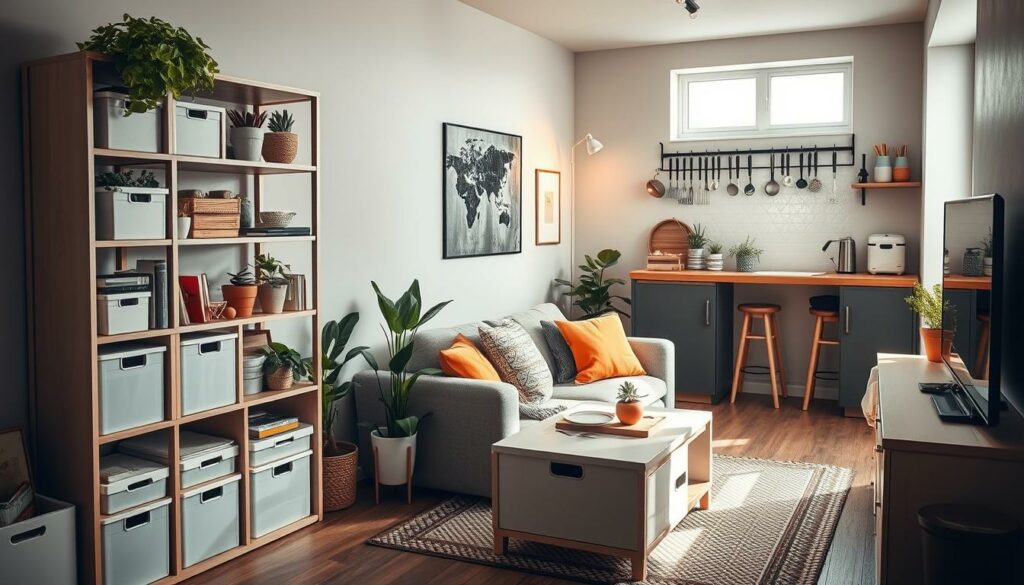
Organizing a small home requires daily habits and little tweaks. Daily routines, weekly clean-ups, and regular deep-cleans keep small spaces tidy. This approach helps avoid stress in organizing.
Establishing Daily Routines
Start with habits that take just minutes each day. Evening tidying, wiping counters, and putting things in the right bins help. Checking the entryway each morning prevents clutter from spreading.
Use a “one in, one out” rule when shopping to limit clutter. Keep a basket by the door for mail; sort it right away. This makes tasks feel automatic over time.
Get family or roommates to help with keeping spaces clean. Each person can focus on a certain area or switch chores regularly. Together, pick a time each week to tidy up busy areas, like the kitchen or living room.
Periodic Review and 调整
Every few months, check if your storage still fits your needs. Change out seasonal items, see what’s working, and give away what you don’t need. Check your original plan for any needed changes to storage or layout.
Before buying new organizers, try them out for a month if possible. Stores like IKEA and Target let you return items, which helps. Keep a record of what helps in a notebook or app for future adjustments.
If you’re dealing with a tricky area, consider adjustable systems or consulting a NAPO-certified Professional Organizer. With small changes, you can keep organizing efficiently as your needs evolve.
Resources and Tools for Better Organization
Start organizing small spaces with the right tools. Try MagicPlan or RoomSketcher to sketch your room. They let you test layouts before buying things. Sortly and Airtable are great for keeping track of what’s in bins and storage. This stops you from buying things you already have.
Apps to Help You Stay Organized
Task management apps like Todoist and Trello remind you of cleaning tasks. Pinterest and Houzz offer great visual inspiration and product suggestions. Evernote or Google Drive can store your papers online, reducing clutter.
Recommended Products for Small Spaces
Mix affordable fixes with bigger investments for the best setup. Start with Command Hooks, clear Sterilite bins, and a Brother P-touch labeler. Look into wallbeds from Better Space or IKEA storage beds for furniture. West Elm or Target storage ottomans add extra seating and storage.
Elfa systems from The Container Store and ClosetMaid organizers help sort closets and pantries. Add magnetic knife strips and under-shelf baskets from Wayfair or Home Depot to save counter space. A Dyson V-series vacuum and microfiber cloths make cleaning easy.
Start with essential items like hooks, bins, and a labeler to plan your space. Always measure and check return policies to avoid expensive mistakes. Make a small change today for better organization. Practical solutions save space and help you stay organized.