
Did you know people spend over 40 minutes a day searching for lost items at home? These lost minutes add up. Learning simple clean-up tricks can save you hours and reduce stress.
Daily cleaning is better than waiting to do a big clean. It stops messes from getting bigger. Keeping your home tidy means less time spent on big cleanups. It also means breathing easier and having a space that helps you focus better.
Set achievable goals: spend 10–20 minutes a day on important tasks. This includes clearing spaces, wiping spills, and putting things away right away. Use tools like lists or apps, such as Todoist or Google Keep, to keep track of cleaning tips and make them habits.
Keeping places clear does more than just reduce clutter. It makes rooms seem larger, a secret we’ll look into more. Have cleaning supplies handy and start small habits today. You’ll see benefits like less dust, less clutter, and a calmer atmosphere. This advice comes from experts at the American Cleaning Institute and includes tips for better indoor air quality from the EPA.
Establish a Daily Cleaning Routine
Keeping a clean house is easier with a daily routine. Clutter is minimal, and your home looks great with little work. Break chores into short, quick tasks to feel instant success.
Morning Cleaning Habits
Start your morning off right. Make your bed to instantly improve your room’s look. Open windows to let fresh air in and clear off countertops. Quickly wash your breakfast dishes or put them in the dishwasher.
Spend a few minutes sweeping or vacuuming areas that get a lot of foot traffic. This keeps your home clean without much effort.
These habits in the morning can make you feel better right away. They get your day going with a positive vibe and stop mess from getting worse.
Evening Cleanup to Refresh Your Space
End your day with a quick 15–20 minute cleanup. Clean kitchen counters, take out the garbage if you need to, and tidy up the living room. Also, pick out your clothes for the next day and quickly clean the bathroom.
Do tasks that are alike in each room to save time. Limiting yourself to short time intervals helps you stay on task.
Think of these clean home strategies when making your routine. Keep your space looking big and welcoming by organizing smartly. This makes having guests over stress-free.
Use reminders and apps to involve your family in cleaning. Sharing small chores makes keeping up with the routine manageable for everyone.
Organize Your Cleaning Supplies
Organizing your cleaning tools can make chores quicker and less of a headache. If your cleaning supplies are well-arranged, you don’t waste time looking for them. This organization also protects your products and helps hide clutter. That makes your space look neat and fits with decorating ideas.
Keep your cleaning kits in the areas you use them most. Having a small caddy on each floor or a kit for both the kitchen and bathroom stops you from carrying items around the house. Put large quantities in marked bins in a garage or closet to keep busy areas tidy.
The Best Storage Solutions
Find storage solutions that fit your space and lifestyle. Rolling caddies make it easy to bring cleaners from one room to another. To save floor space, use organizers that attach to the wall. Transparent bins help you quickly see what’s inside. Over-the-door racks are great for holding spray bottles and cleaning cloths. And, drawers that slide out under the sink make it easy to reach what you need without bending down.
You can buy sturdy organizers from places like IKEA, The Container Store, or Home Depot. Choose options that fit well in your space and check that they’re convenient to use every day. These are among the best choices for keeping a busy home organized.
Essential Tools You Should Have
Have a basic kit ready so you can easily tackle small clean-up tasks. Essentials include microfiber cloths, multi-surface cleaners (like vinegar and baking soda mix), glass cleaner, and disinfectant wipes. Don’t forget a broom and dustpan, a good mop (O-Cedar spin or spray types are great), scrub brushes, and a lint roller.
When choosing a vacuum, look at brands like Dyson, Shark, or Miele to fit your budget. A cordless stick vacuum is handy for quick pick-ups. A small, handheld vacuum is perfect for furniture and stairs. Also, wear protective gloves for heavy-duty cleaning. Use eco-friendly reusable cloths to minimize waste.
Take good care of your tools to make them last longer and work better. Wash mops after use, keep vacuum filters clean, and change trash bags properly. Regular maintenance saves money and ensures your tools are ready when you need them.
Declutter Regularly
Start by regularly getting rid of things you no longer need. This makes cleaning simpler and rooms look bigger. It also cuts down stress. Doing a little bit every day works better than waiting to do a lot.
Tips for a Clutter-Free Home
Follow a simple rule when you get something new: get rid of something old. This stops clutter from growing. Spend 10 minutes each day tidying up to keep your home neat.
Set up boxes for items you can donate and make plans to take them to places like Goodwill. Earn some extra money by selling stuff on sites like Facebook Marketplace. Use apps like CamScanner to digitize papers you don’t need anymore. Use clear bins for storage and shelves to save space on the floor.
Decide what to keep by asking: Did you use it last year? Does it make you happy? Does it have a place in your home? If you answer ‘no’, then donate, sell, recycle, or throw it away.
How to Tackle One Room at a Time
Begin with areas you use a lot, like the kitchen or living room. Then, organize items into groups: keep, donate or sell, recycle, and trash. Set a timer to keep yourself on track.
Set goals for each room to help you feel like you’re making progress. Move furniture around to open up space and use furniture with storage. These tricks make small spaces feel bigger without big changes.
Plan to get rid of large items through neighborhood pickup or donation centers. Selling items on local apps can also help clear out clutter quickly.
Clean as You Go
Start a new habit: Take care of small messes immediately. This stops them from piling up. If you clean little by little, everyday cleaning becomes easier. Just by keeping surfaces clear, you’ll see cleaner areas and reduce the need for big cleans.
Kitchen Habits to Adopt
After eating, quickly rinse dishes or put them in the dishwasher. This stops food from hardening and makes cleaning easier. Make sure to clean up any spills right away to keep your counters in good shape.
Always clean your cutting boards and counters when switching tasks. This helps avoid spreading germs. Using parchment paper for baking simplifies cleanup. Organizing your kitchen with shelf liners and vertical storage can decrease clutter.
Have a designated spot for mail and keys to keep counters tidy. Regularly throw out old food from your fridge. Doing a quick sink clean every night keeps your kitchen looking and smelling fresh.
Bathroom Maintenance Tips
After showering, use a squeegee on doors or tiles. This prevents soap buildup and mildew. Tidying the sink area after using it helps keep the bathroom looking nice.
Always have cleaning supplies like cloths or sprays handy for quick wipes. Using toilet bowl cleaners or doing regular scrubs makes toilet maintenance easy. Keep small toiletries organized in a caddy to reduce clutter.
Choose shower curtains and bath mats that can be washed. This reduces laundry hassle. Installing a small caddy for daily use items keeps your bathroom tidy. Keep wipes near the toilet for easy cleaning.
Following these cleaning tips can help your home stay organized. It also makes your rooms look bigger. Keeping areas clutter-free improves the overall appearance and feel of both the kitchen and bathroom.
Focus on High-Traffic Areas
High-traffic areas need more cleaning because they get dirty fast. Cleaning these areas well makes your home stay clean longer. Simple cleaning routines help protect floors and other surfaces.
Living Room Cleaning Essentials
Clean upholstery and rugs often by vacuuming. Take smaller rugs outside to shake off dust. Choose low-pile, light rugs to make the room feel bigger. Fluff and turn cushions to help them last longer and look good.
Dust electronics and shelves with a microfiber cloth to avoid streaks. Clean coffee tables daily to keep away crumbs and spills. Put remotes and magazines in trays to make the room look tidy.
Hide wires with cord clips or channels. Keeping wires out of sight is key to making your living room look neat and makes cleaning easier.
Keeping Hallways and Entryways Tidy
Create a no-shoes rule or use a shoe rack to keep dirt out. Place mats inside and outside the door. This catches more dirt.
Hang coats up and have a place for keys and mail. A slim bench can hide shoes and give you a place to sit.
Clean entryways every day to stop dirt from spreading. Keep the area clear and use mirrors to make it seem bigger. This trick makes small spaces feel more open.
Clean high-traffic areas each week and check the entryway monthly for scuffs and burnt-out light bulbs. Following these tips helps your home stay nice and inviting.
Use Natural Cleaning Products
Choosing natural cleaning products leads to health and environment benefits. These products minimize harsh fumes that can upset your eyes and lungs. They also make your home safer for kids and pets. Making these cleaners at home can save money and be gentle on surfaces.
Benefits of Eco-Friendly Cleaners
Eco-friendly cleaners cut down on harmful substances, improving the air inside. The EPA points out they reduce indoor pollutants. You also protect your home’s finishes with these softer formulas. You can easily find brands like Seventh Generation and Method in U.S. stores. They give you good cleaning results.
Lower levels of toxic substances keep the air in small spaces fresh. This helps make tiny rooms and apartments more pleasant. It creates a cleaner, more welcoming space that feels bigger.
DIY Cleaning Solutions You’ll Love
Creating your own cleaning solutions can be effective and simple. Combine white vinegar and water for shiny glass and general cleaning. But, don’t use vinegar on sensitive stones like marble and granite.
To tackle tough dirt, mix baking soda and water into a paste. Use it on grout or stains. Lemon juice works well on grease and smells nice. Hydrogen peroxide is good for lightening laundry and minor stains. For wood, mix olive oil and lemon juice; always test it in a hidden area first.
Remember, never mix vinegar with bleach or hydrogen peroxide with vinegar. Label your spray bottles for reuse. Always test your homemade cleaners on a small, hidden spot before using them everywhere. Use these solutions with microfiber cloths and silicone scrubbers for the best shine without streaks.
Here’s a guide to help you pick the right natural cleaner and tool for everyday tasks.
| Task | DIY Solution | Best Tool | Notes |
|---|---|---|---|
| Glass and mirrors | 1:1 white vinegar and water | Microfiber cloth | Avoid on tinted windows; buff dry for no streaks |
| Grout and stains | Baking soda paste | Silicone scrubber or old toothbrush | Let sit 5–10 minutes, rinse thoroughly |
| Grease removal | Lemon juice or vinegar solution | Reusable spray bottle and cloth | Good for stovetops; avoid natural stone |
| Whitening laundry | Hydrogen peroxide (3%) as additive | Washing machine or soak basin | Safe for most fabrics; test colors first |
| Wood polishing | Olive oil + lemon juice | Soft cloth | Use sparingly to avoid buildup |
Follow these tips for a clean, healthy home. Matching natural cleaners with the right tools gives you safe, effective results. These small choices can greatly improve your air quality and comfort, especially in small spaces.
Involve the Family in Cleaning Tasks
Getting everyone involved makes things easier and builds good habits. When the family shares cleaning tasks, it all goes quicker. Plus, the home’s cleanliness is maintained. Kids pick up responsibility, while adults avoid feeling overwhelmed. By doing a little each day, you avoid big cleanups.
Creating a Cleaning Schedule for Everyone
Create a cleaning plan that includes daily, weekly, and monthly tasks. Use tools like a chart, magnetic board, or a shared Google Calendar to keep track of duties. By rotating chores, everyone shares the workload fairly.
Simple daily tasks could be doing dishes, cleaning counters, and organizing shoes. Weekly tasks might involve vacuuming and dusting. For the monthly deep cleans, focus on the appliances and bathrooms. Give tasks that are right for each person’s age to stay safe.
For the little ones, have them pick up toys and sort socks. Teenagers can vacuum, manage trash, and load the dishwasher. Adults should handle the tougher jobs, especially those needing strong cleaners. Celebrate everyone’s hard work with praise or small rewards to keep up the good habits.
Fun Ways to Make Cleaning Engaging
Make cleaning fun by turning it into games. Race against the clock with lively music or set up a reward system. Celebrating progress with before-and-after photos makes it enjoyable for all.
Apps like ChoreMonster or OurHome can make tasks more like a game. Have a monthly cleaning night with treats and breaks to keep spirits high. Competitions and rewards make the routine more bearable.
Using smart cleaning tips and design ideas maintains cleanliness, even in small spaces. Stick to designated storage areas, limit duplicates, and reset spaces daily. These practices keep spaces tidy and clutter-free.
Seasonal Deep Cleaning Tips
Seasonal deep cleaning refreshes your home beyond everyday tasks. It includes a plan to clean hidden dust, maintain appliances, and get ready for visitors. Choose the right tools and spread the cleaning over weeks. This way, you won’t get too tired and you can stay energized.
The Importance of a Spring Clean
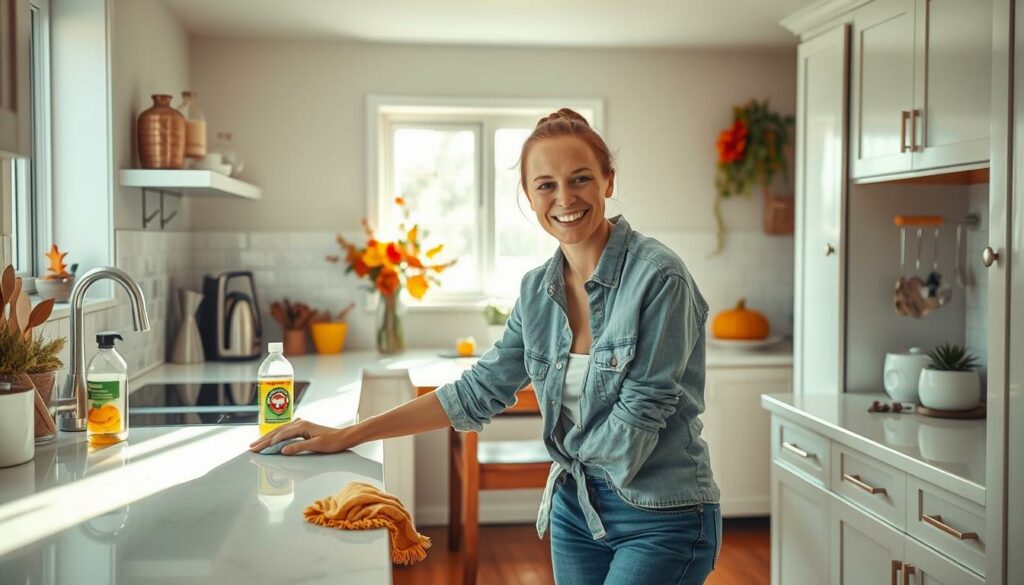
Spring cleaning makes the air inside better and your living spaces brighter. Begin with the windows and tracks, then clean carpets or steam rugs. Wash curtains and cushion covers to remove dust and smells. Also, clean vents and fans to reduce allergens left from winter.
Move big furniture to clean underneath and behind. Service your oven and clean the fridge coils to keep them working right. Change HVAC filters as needed to keep the air flowing and lessen dust. These efforts show why spring cleaning is key for healthier, airier rooms.
Decluttering Before the Holidays
Clearing clutter before the holidays opens up space for guests and festive decor. Organize holiday items early, give away what you don’t need, and label everything clearly. Make guest areas and closets clean, and wash bedding to be ready for visitors.
Thoroughly clean your bathrooms and check supplies like towels and rugs. Make sure your kitchen is ready to host gatherings smoothly. Giving things away before the rush helps avoid stress and keeps the holidays peaceful.
Divide deep cleaning into weekly chunks over a month. Use a list: first week for textiles, second week for appliances, third for storage, and fourth for final touches. If heavy lifting is needed, like for carpet or couch cleaning, consider hiring a pro. Following these tips will make the work manageable and effective.
Getting rid of stuff you don’t need and washing things like blankets and clothes lightens your space. This, along with arranging things wisely and choosing light colors, makes rooms look bigger as busy times approach.
Maintain a Fresh Smell in Your Home
A light, pleasant scent makes your home feel cleaner and seem more spacious. Avoid strong fragrances. Instead, use gentle, natural smells that enhance your cleaning. Begin with easy steps and soon, your home will feel fresher.
Simple Air Freshening Techniques
Open windows when the weather is good. Place diffusers or reed sachets around to spread the scent. Use activated charcoal or baking soda to soak up bad odors. Add green plants like snake plant or pothos for better air. Choose essential oil diffusers from brands like Vitruvi, doTERRA, or Plant Therapy, but use them sparingly. Good scent choices include lavender, lemon, and eucalyptus.
Ways to Reduce Odors Effectively
Start by dealing with the cause: take out the trash often, keep pet areas clean, and wash linens with vinegar to cut odors. Clean things that hold smells, like sofa covers, curtains, and carpets. Use steam cleaning for carpets. Enzyme cleaners work well for organic spills. To keep your kitchen smelling fresh, clean your garbage disposal with ice and lemon.
In small spaces, use sachets or reed diffusers rather than sprays to keep the air light. Stick to a cleaning schedule: air out your home weekly, refresh fabrics monthly, and handle odors right away. By following these tips, you’ll keep your place smelling great and feeling welcoming.