
About 70% of people in the U.S. feel that mess in the kitchen ups their daily stress. It’s a big deal for a spot meant to gather folks together.
Here’s a quick guide with down-to-earth, friendly advice on making your kitchen neat, efficient, and good-looking. It doesn’t matter if you’re renting in New York or own a place in Phoenix. These ideas work for any space, schedule, and those who like being green.
There are quick fixes for your drawers and pantry. Plus, smart ways to use up wall space, sort your spices, label things clearly, and use transparent containers. You’ll learn about setting up a simple kitchen hub and routines to keep everything tidy. These tips also link to broader cleaning habits for an effortlessly clean kitchen.
By following these tips, you’ll cut down meal prep time, feel more chill, clean up quicker, and have a kitchen that makes everyone happy. Ready to make your kitchen a better place? Let’s dive in.
Why Kitchen Organization is Important
Organizing your kitchen changes your cooking and living habits. It saves time looking for things, reduces waste, and makes cleaning easier. Starting small habits leads to big changes, turning disorder into peace.
Benefits of an organized kitchen
When you keep raw and cooked foods apart, health and safety get better. You can find old food quickly and avoid mixing food types that shouldn’t touch. This way, you save money because you don’t buy things you don’t need or let food go bad.
Having your basic foods in easy view helps you make meal plans and shop wisely. Research shows that clean areas lower stress and help you focus. This makes cooking enjoyable. You create a clean environment that supports easy cleaning habits.
Time-saving hacks for meal prep
Set up your kitchen with zones for cutting, cooking, and serving. Have tools like cutting boards and knives ready to speed up cooking. Use labels for pantry areas to find what you need for your meals easily.
Cooking in big batches and using clear stackable containers saves time during the week. It also helps you make decisions faster. Have a special spot for measuring tools and often-used items to avoid searching when in a hurry.
- Adopt decluttering tips: sort regularly and donate extras to keep counters free.
- Wash and reuse glass jars for storage to cut waste and streamline replacements.
- Schedule short, daily tasks that feed into efficient cleaning routines for a lasting tidy space.
Utilize Drawer Dividers for Utensils
Keeping utensils neat gives your kitchen a peaceful vibe and saves meal prep time. Drawer dividers help organize shallow spaces, avoiding messy piles. They make finding tools easy. Follow simple steps to organize a chaotic drawer into a helpful cooking area.
First, measure your drawer and plan how to group items. Consider how flatware, serving spoons, and spatulas will sit. This planning stops wasted space and keeps counters tidy.
Choosing the Right Divider
Divider materials are important for their lifespan and care. Bamboo is strong, green, and warms up wood kitchens. Plastics are budget-friendly and easy to clean. Silicone bends for awkward items. Metals are great for heavy use.
Choose adjustable dividers for non-standard drawers. Brands like Simplehuman offer resizable systems. Look for dividers that keep items stable and are easy to clean.
Creative Uses Beyond Utensils
Drawer dividers aren’t just for cutlery. They organize small kitchen gadgets and junk drawer items. Think about using them for lids and baking tools.
Imagine a drawer as a mini coffee station. Or use it to store small appliance parts. This helps save space and keeps things organized.
| Need | Recommended Material | Best Feature |
|---|---|---|
| Everyday flatware | Bamboo | Durable, attractive finish |
| Irregular drawers | Adjustable plastic | Modular sizing and low cost |
| Flexible, odd-shaped tools | Silicone | Stretchy fit, easy to clean |
| Heavy or metallic tools | Metal | Long-lasting, sturdy support |
| Multi-use drawers (coffee, gadgets) | Modular systems | Customizable compartments |
These small changes are some of the best ways to organize your kitchen. They blend into bigger home organization plans. And they make you happy every time you open a drawer.
Maximize Vertical Space with Shelves
Clear your counters and make your kitchen look bigger by using wall space. By maximizing vertical space, you get more room to show off and store things you use daily. This goes hand in hand with simple home organizing ideas. It helps keep items visible and within reach.
Installing floating shelves
Install shelves over countertops, next to the stove, or on pantry doors for mugs, spices, and dishes. For a cozy vibe, choose treated pine or oak. Metal brackets will give you an industrial look. Use boards that resist moisture near any sinks to prevent them from bending.
To hold heavy items, make sure to find the wall studs. If using drywall, don’t forget wall anchors. Arrange shelves at different heights to fit both tall and short items neatly together. Keeping containers the same and using one color theme will lessen clutter. This keeps everyday items handy.
Adjustable shelving units
Pick systems that can change as your needs do. Brands like IKEA and The Container Store have flexible shelving. You can adjust the shelves to fit different items, like cereal boxes or dishes, when necessary.
In pantries or cabinets, use risers, pull-out trays, and lazy Susans to access everything easily. Make sure to fasten tall shelves to the wall for safety. Sort shelves by type, like baking supplies or snacks, and mark them. Clear labels help with quick clean-ups and are part of easy cleaning tips to keep your home tidy.
- Above-counter shelves keep prep areas neat and peaceful.
- Using the same containers helps you cook faster and easier.
- Shelving that adjusts can meet changing needs, from seasonal buys to different storage needs.
Smart Storage Solutions for Small Kitchens
Small kitchens need clever ways to store things so everything is handy but out of the way. This guide will help you find the right storage options for your space and habits.
Begin by tackling the area under the sink. Put cleaning supplies in bins that won’t get damaged by water. Choose materials like plastic or stainless steel to prevent rust and handle leaks easily. Roll-out organizers, such as the OXO Good Grips under-sink organizer, make grabbing items easy without having to search.
Install tension rods vertically to hang spray bottles, which opens up shelf space. Label baskets for sponges, brushes, and refills to keep the under-sink area neat. This makes getting to pipes or the disposal unit easy when needed.
Pull-out trays make it simple to use all available space. A sliding tray means you can access items at the back without removing everything. Having a spot for each item helps keep your cleaning tasks efficient.
Look for furniture that serves more than one purpose. A kitchen island on wheels offers extra space and can be moved out of sight. Some come with features like drawers and a towel rack, and they might have wheels that lock for safety.
Consider tables or counters that fold down to save space when not in use. Appliance garages are great for keeping small kitchen tools hidden but ready. Use built-in charging stations to keep cords organized and prevent tangling.
Benches and stools can have storage underneath for larger items or recycling. They save space and offer a quick spot to sit for meals or prep work.
Use this guide to compare different storage options for tiny kitchens. It’ll help you decide what’s best for your needs.
| Solution | Best For | Pros | Cons |
|---|---|---|---|
| Roll-out under-sink organizer | Cleaning supplies, limited depth | Easy access, keeps plumbing reachable, moisture-resistant options | Requires some cabinet modification |
| Vertical tension rods | Spray bottles and handbags | Low cost, tool-free install, frees shelf space | Holds lighter items only |
| Rolling kitchen island | Additional prep area and storage | Mobile, multifunctional, adds drawers and racks | Needs floor clearance, can be heavy |
| Drop-leaf table | Flexible dining and prep needs | Space-saving, folds flat, simple design | Limited workspace when folded |
| Appliance garage with charging station | Small appliances and cords | Reduces countertop clutter, keeps devices ready | Custom fit may be costly |
| Under-seat storage bench | Bulk items, recycling, linens | Dual-purpose seating and storage, hidden compartments | Access may require moving cushions |
Spice Organization Made Easy
Spices are small, numerous, and essential. They keep your food tasty. A good organization method makes everything quicker and prevents waste. It’s important to have your jars organized so they’re easy to find and use.
Spice Jars: Labeling and Storage
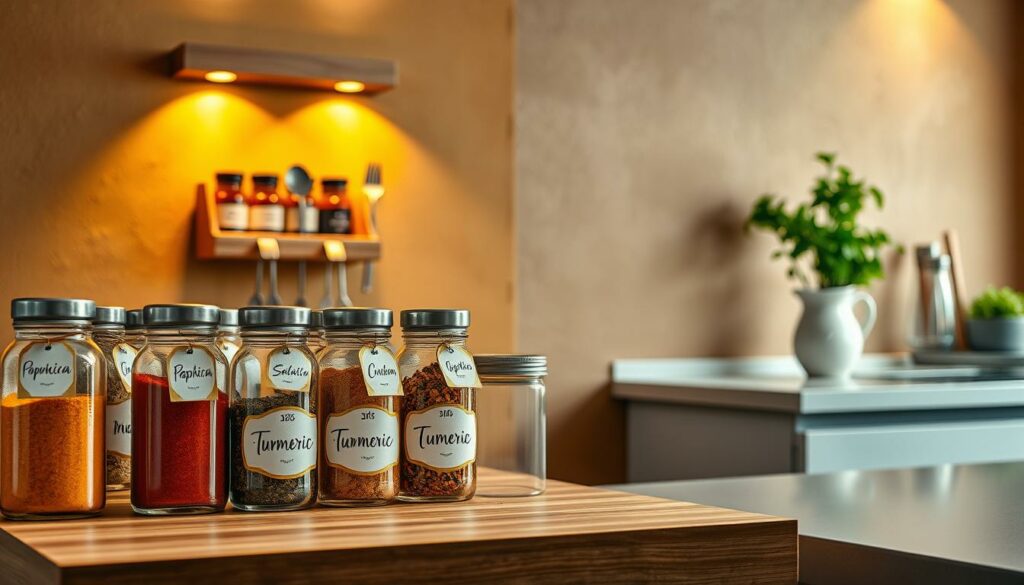
Choose uniform glass jars for a neat look. Brands like Weck, Ball, or Kirkland work well. Don’t forget to label jars with the spice name and date. This helps you know when they’re not good anymore.
Decide between printed or handwritten labels. Printed ones from Brother label makers are durable. But, a permanent marker on waterproof labels is good for quick labelling.
Keep the spices you use a lot near the stove. But put those used less in a cool, dark place. For extra spices, store them in airtight containers. Funnels and tools make refilling easy.
Using Magnetic Spice Racks
Magnetic racks save space by hanging on walls or fridges. IKEA’s MASMARR-style tins with magnetic backs are perfect for this. They keep everything organized.
Choose racks with clear lids to see the spices easily. Make sure labels are on the side or bottom. This helps you know what’s what, even when you move things around.
This setup makes it easy to see and reorganize your spices. Buying in bulk saves packaging and supports the environment. It’s a smart move for any kitchen.
Creative Use of Containers
Containers keep pantry items and fridge leftovers organized. They turn clutter into neat, easily stackable storage. This makes your kitchen more efficient. Choose containers that are easy to see into and clean. Small changes and smart reuse can make things last longer, keep counters tidy, and reduce waste.
Glass vs. plastic
Glass like Pyrex and Anchor Hocking stays nice with daily use. It doesn’t stain from tomato sauces. Rubbermaid Brilliance has BPA-free plastic choices. They’re light for lunchboxes. Clear containers let you see what’s inside right away. This helps you remember what leftovers you have.
Stacking and labeling
Pick containers that are all one size for easy stacking. Label them with what’s inside and when it was stored. Airtight seals keep food fresh longer. Choices that are dishwasher-safe go well with efficient cleaning routines. They are also good for the environment.
Everyday repurposing
Use Mason jars for spices, salads, or holding utensils. Tin cans can hold utensils too, if lined. Ice cube trays and muffin tins work well for freezing small amounts of pesto, lemon juice, or sauces. These ideas help you reuse things at home. They cut down on waste and save money.
Creative storage solutions
Hang a clear shoe organizer on your pantry door for easy snack access. Use seagrass or wire baskets to keep items together. They reduce clutter. These ideas work well with clear containers. They help keep your kitchen organized, even when you’re busy.
Quick cleaning tips
Use glass containers for foods that stain. This stops plastic from getting discolored. Sort containers by type before putting them in the dishwasher. This keeps them in good condition. Quick habits like rinsing containers before stacking reduce cleaning time. Eco-friendly cleaning practices keep your kitchen green.
Sustainable habits
Reusing items at home lessens trash and is good for the planet. Mixing clear containers with creative recycling keeps your kitchen working well. It stays looking nice and supports living in a way that’s good for the earth.
Organizing Your Pantry Like a Pro
Begin by sorting quickly to identify what items you have and use often. A smart layout makes cooking easier and reduces waste. Apply these organizing tips to make your pantry setup easy and consistent for everyone at home.
Grouping like items together makes everything clear. Place baking supplies in one area and breakfast essentials in another. Give canned goods and sauces their own shelf. Keep daily basics at eye level and heavy items below. Rarely used things go on the top shelf.
Start using older items first. When you restock, label the expiration dates. Use airtight containers for things like flour, sugar, and rice. This keeps bugs out and maintains freshness.
Grouping Like Items Together
Organize your pantry into clear sections. This includes baking ingredients, breakfast items, and snacks. Use the same type of containers to easily see when supplies are low. It helps you prepare meals faster and shop smarter.
Arrange your pantry by meal types. For example, place items needed for Italian cooking close to each other. Keep snacks within easy reach for kids. Such organization boosts efficiency and helps keep your space tidy over time.
Using Baskets for Easy Access
Choose baskets based on their use, like wicker for produce. Clear bins are great for cereals. Label each basket by category for quick finds. This method helps everyone in the family locate what they need easily.
Consider adding pull-out bins or movable shelves. This makes items in the back reachable and helps you remember to use them. Every few weeks, take time to check the pantry. Get rid of old food, update labels, and refresh your organization method.
| Zone | Recommended Storage | Best Practice |
|---|---|---|
| Baking | Airtight containers for flour, sugar; labeled mason jars for spices | Rotate older bags to the front; keep measuring tools nearby |
| Breakfast | Clear plastic bins for cereals; baskets for granola bars | Create a morning grab-and-go zone for busy weekdays |
| Canned Goods & Sauces | Wire racks or tiered shelf organizers | Group by type and label rows with purchase or use-by dates |
| Snacks | Wicker or fabric baskets; individual snack bins | Use labeled baskets for portion control and easy access |
| Grains & Bulk | Stackable airtight containers with scoop | Store similar items together and note expiration dates |
| Oils & Vinegars | Small tray or shallow basket to catch drips | Keep oils near the cooking zone for fast reach |
Labeling System for Clarity
A clear label system makes meal prep faster and easier. It lets everyone know where things belong, so your kitchen stays neat. This helps you follow your decluttering advice.
To make labels work best, follow simple guidelines. Write down the name and opening date of each item. For things that need special storage, like store in fridge, note that too. Labels should face out in the pantry and be on the jar sides if you stack them.
Choose label materials that last in the kitchen. Use waterproof labels for those accidental spills. For those who rent and move, removable vinyl is perfect. Color-coding, like green for baking items and red for spices, makes finding things quick.
Best Practices for Labeling
Keep your labels consistent. Doing so reduces confusion and speeds things up when you’re busy.
- Include item name and date opened.
- Add short storage notes when helpful.
- Place labels so they remain visible when items are stacked.
- Pick durable materials for long-lasting clarity.
- Apply a color code to speed visual sorting.
Label Makers vs. Handwritten Labels
Label makers, like Brother P-touch and Dymo, produce neat, lasting labels. They’re great for things you use a lot or don’t change often.
Handwritten labels offer quick, adaptable solutions. Use them on jars that change contents often, with permanent markers or chalk pens. They’re ideal for temporary needs or changing seasons.
| Feature | Label Maker | Handwritten Label |
|---|---|---|
| Look | Professional, uniform | Casual, homey |
| Durability | High with laminated tape | Variable; depends on material |
| Cost | Upfront device cost, low per label | Low upfront; minimal supplies |
| Flexibility | Best for set systems | Best for changing contents |
| Best use | Long-term containers and bins | Temporary jars, experiments, leftovers |
Mix printed and handwritten labels for the best system. Print for items that stay the same and handwrite for those that change. This approach helps you stay organized and follow your decluttering tips better.
Incorporate a Kitchen Command Center
Create a go-to spot for schedules, recipes, and notes. Place it near the fridge. It will reduce morning stress and help keep everyone’s plans clear. Use digital tools and a visible board to keep all family members updated.
Make cooking easier by organizing recipes and meal plans. Use apps like Paprika, Plan to Eat, or Google Keep for saving favorites and making shopping lists. Also, keep a physical binder for breakfast, lunch, dinner, and desserts. Use sheet protectors for printed recipes to protect them from spills.
Plan your meals weekly to make shopping and cooking simpler. Write down your plan and what you need to buy. Then, set a time for preparing meals in advance. Keep the day’s recipes or shopping list near the stove with magnetic clips. This will save time and make cleaning easier.
Have a calendar everyone can see. You can use a big wall calendar, whiteboard, or corkboard. Note down meal plans, school activities, work shifts, and cleaning tasks. Use different colors or initials for each person, so responsibilities are easy to see.
Combine the wall display with digital calendars like Google Calendar. This sends reminders and helps prevent missed activities. Also, list out weekly tasks and short checklists. This gets everyone involved. Clear roles keep things orderly and support cleaning tips without needing long talks.
Tips for Maintaining Your Organized Kitchen
Organizing is more about daily habits than a one-off clean-up. Set up simple actions for every day, week, and month. This keeps your organized space working well thanks to drawer dividers, labels, and shelves.
Establishing a Cleaning Routine
Begin with easy daily tasks: cleaning countertops, putting dishes away, handling spills, and placing items back. Every week, toss old food, sweep, mop, and clean the cabinets. Once a month, give appliances like your oven a thorough cleaning, check for expired food, and think about your storage needs.
Involving Family Members in Organization
Give family members tasks they can handle. Kids might organize snacks, while adults plan meals and make grocery lists. Use clear labels and charts to show where things go and who’s responsible.
Make cleaning faster by multitasking and using safe cleaners like Seventh Generation. Have a quick 15-30 minute clean-up with the family each week to stay tidy. Offer fun rewards for helping out, like a pizza night.
Small changes, like adding drawer organizers or labels, make a big difference. Following these tips, keeping your kitchen organized becomes easier over time.