
Almost 60% of people in the U.S. say messy homes make mornings harder. A clean closet can help start your day right. Organizing your closet does more than just make it look good. It saves you time, helps your clothes last longer, and frees up space, especially in homes where room is limited.
This guide offers easy, affordable tips and DIY projects for closet organization. These ideas help you find things fast and keep your space tidy. You’ll learn DIY home improvement and repair tips for both small and big closets.
We’ll cover 11 easy steps: check your space, sort things out, make use of up-high space, add storage, keep to a one in/one out rule, switch to thin hangers, organize by color, label everything, swap out seasonal items, use drawer dividers, and keep up the good work. You’ll use simple tools and items like thin hangers, stackable boxes, sticky hooks, shelf supports, boxes for under the bed, labels, drawer dividers, and a basic tool set.
Remember safety: when putting up shelves or hooks, find the wall studs and use proper anchors. Make sure to follow the weight guidelines to prevent damage or injury.
Work on one closet part at a time, recycle what you can, and give away things thoughtfully. With steady, small steps and these organizing tips, your routine will become smoother and more efficient.
Assessing Your Closet Space
Before adding organizers or exploring closet tips, clearly see what’s in your closet. A quick check saves both time and money. It also helps you plan simple fixes that can greatly improve your space.
Evaluate Your Current Setup
Start by measuring your closet’s width, depth, and height. Note the kind of rods, shelves, drawers, lights, or doors it has. Keep these details handy to find the best organization options.
Take pictures of the inside. Use these photos to find unused space, full rods, or empty spots for bins. See what organizing tools you have to avoid buying the same things.
Think about what you use daily. Keep those items at eye level for easy access. Put seldom-used items on higher shelves or corners.
Identify Items to Keep, Donate, or Discard
Sort your items into three groups: Keep, Donate, Discard. Pick them based on fit, condition, how much you use them, and if they still fit your style or life stage. Check expensive or delicate items for any repairs needed.
For donations, choose organizations like Goodwill and The Salvation Army or local drives. Use textile recycling for worn-out items. Set a deadline to drop off or schedule pick-up donations to avoid clutter.
Store seasonal items separately for a bit. This makes choosing what to keep easier. Simple fixes like shelf dividers or a new rod can then keep things organized.
Sort by Category for Clarity
First, clear a flat surface and make broad piles of everything. This helps you see duplicates and items that are too worn. Use simple organizing tools and a plan. This keeps the job quick and tidy.
Clothes, Shoes, and Accessories
Divide clothes into clear groups: tops, bottoms, dresses, coats, sports clothes, and pajamas. Then, separate fancy shirts from daily ones. This makes choosing what to wear easier.
For shoes, try organizers like over-the-door racks or cubbies. IKEA and The Container Store have clear boxes to keep shoes safe and save space. Use small bins or drawer dividers for belts, ties, and jewelry. This stops them from getting tangled or lost.
Seasonal Sorting
Change your clothes out twice a year. This keeps the right clothes handy. Use vacuum-seal bags, labeled bins, or space under the bed for clothes you’re not wearing.
Store heavy coats in breathable bags for long-term care. Cedar blocks or lavender sachets protect from moths and keep clothes smelling fresh. Have a few items ready for changing weather, like a light jacket.
Create a checklist for changing your closet with the seasons. Doing this regularly helps keep your closet organized and reduces clutter over time.
For small fixes during reorganization, see them as quick home improvement tasks. Tighten screws, replace broken hangers, or add a shelf bracket. These small DIY tasks are quick and keep everything in order.
Utilize Vertical Space Effectively
Turning a cramped closet into a smart storage zone is all about using vertical space wisely. With some smart moves, you can increase your storage area without a big remodel. Effective closet organization tips combine good planning with the right tools, keeping your stuff visible and within reach.
Install Shelves Above Hanging Rods
Adding shelves above your hanging rods takes advantage of unused space. Brands like Rubbermaid or ClosetMaid offer adjustable systems. This allows you to change shelf heights without having to redo your walls. Store hats, seasonal gear, and boxes in clear bins or ones with labels so you can see inside without having to move things around.
When putting up shelves, it’s best to attach them to wall studs for safety. If you can’t find a stud where you need one, use heavy-duty wall anchors that can support the weight you’re planning on adding. Small closets benefit from a second rod below the first, doubling hanging space for shirts and pants. And in spaces with high ceilings, rods that pull down make it easier to reach items stored up high.
Use Hooks for Bags and Accessories
Using hooks can help you save space on shelves and the floor by giving things like handbags and scarves their own spot. Command Hooks are great for renters since they don’t leave marks. For heavier items like leather bags, secure screw-in hooks into studs or use strong anchors.
Keep your accessories organized by hanging similar ones together, either on a single hook or a set of S-hooks. Place hooks at varying heights to hold kids’ stuff and longer items without tangling. You can also install a pegboard for adjustable storage of jewelry, belts, and small tools. It’s an affordable DIY project that requires minimal tools.
Small DIY projects and simple repairs can make your vertical space much more useful. Even minor changes can significantly improve storage and make your daily life more convenient, especially if you use these closet organization tips.
Incorporate Storage Solutions
Smart storage makes your closet neat and tidy. Choose options that suit your routine and budget. This way, you’ll waste less time looking for clothes and more time wearing them. These suggestions work well with closet tips and quick fixes you can do in one afternoon.
Bins and baskets for small items
Use clear plastic bins from Sterilite, woven baskets, or fabric cubes for keeping small things like socks, underwear, and hats organized. Put similar items together and label them. This makes finding what you need quick and easy. If you don’t have much shelf space, go for stackable bins.
Padded storage boxes are great for delicate items, protecting them from dust and damage. Keep bins for everyday items within easy reach. Store the ones you use less often higher up.
Under-bed storage options
Under-bed containers are perfect for storing big items like comforters and seasonal clothes out of sight. Choose rolling boxes for easy access. Also, flat vacuum-seal bags from Ziploc or SpaceSaver are good for compressing things you don’t need often.
For items stored for a long time, pick fabric bins that let the air in to prevent moisture. Adding silica gel packets helps in damp areas. Make sure your bins have handles or wheels for easy use.
- Make sure every container is labeled well so you can tell what’s inside at a glance.
- Organize your bins by category to find things faster.
- Combine DIY projects with store-bought items for personalized, budget-friendly storage solutions.
Implement the “One In, One Out” Rule
Start with a simple habit every time you shop to keep your closet neat. Whenever you buy a new item like a shirt, shoes, or accessory, take out something old you don’t use. This method prevents clutter and ensures your closet matches your current style and needs.
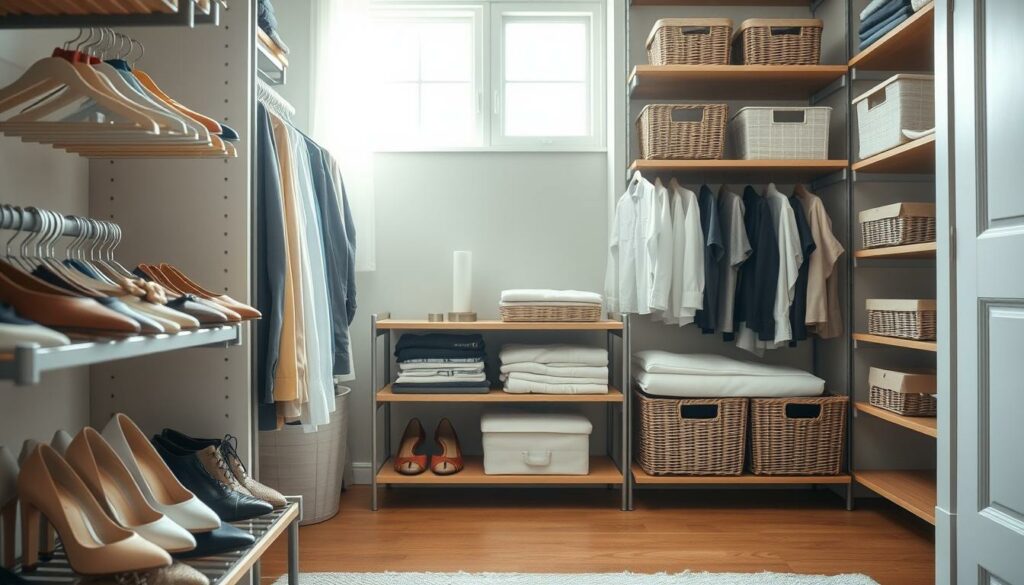
Maintain a Balanced Wardrobe
Wait a bit before buying things you don’t necessarily need. Give yourself 24–72 hours to think it over. Make a wishlist to keep track of what’s important to you. This stops quick, regrettable purchases and makes you value quality more than quantity.
Keep a simple list or use an app to track your clothes. Record what you wear and make sure you have the right mix of casual and formal outfits. This approach helps you organize your closet better and keep everything useful.
Keep Your Closet Manageable
Put a donation box in your closet and mark it clearly. When it’s full, take it to a donation center. This habit makes giving away clothes easy and quick, a handy home maintenance tip.
If you have kids, swap out clothes they’ve outgrown right away. Use the one-in-one-out rule for the whole family to avoid too much stuff. Check your closet every few months to see what you really wear and make room for new, significant items.
Think green when getting rid of clothes. Give away good clothes to charity or swap them with friends. These tips help cut down on waste and keep your closet meaningful and organized.
Use Slim Hangers for More Space
Switching to slim, velvet hangers saves a lot of closet space. Using the same type of hangers keeps clothes neatly lined up and makes them easier to see. This simple change can give you up to 30% more room for hanging clothes.
For items with straps, opt for hangers with clips or notches. This stops them from slipping off and losing their shape. Use padded hangers for delicate items like silk blouses to avoid damage. And for heavy stuff, metal hangers with a coating are best. They won’t bend or harm your clothes like thin wire hangers do.
Save more space by using hangers designed for stacking clothes vertically. This works great for pants, scarves, or tops. To keep long clothes clean and off the floor, choose the right hanger. With these, you can include some DIY tricks like adding more rods to improve your closet further.
Combining slim hangers with special clips helps stop clothes from getting tangled. This quick fix makes picking outfits easier. It also protects your clothes from wear and tear.
Color Code Your Wardrobe
Color coding turns a messy closet into a peaceful, store-like area you love. Begin with one type, such as shirts or dresses, and sort them from lightest to darkest. Place neutrals together, then move to brighter colors for easy outfit choices.
Create a Visual Appeal
Matching hangers and equal spacing give your closet a tidy look. Add LED lights or battery-operated lights to highlight everything. Painting the back wall or adding a scarf rod can also enhance the closet’s appearance.
Simplify Outfit Choices
With an organized color scheme, finding outfits is quicker. Sort clothes by type and use color coding. To separate work and casual wear, use colored hangers or dividers. This keeps your choices simple and stress-free.
Weekend closet organization projects can improve your daily routine. Small changes can have a big impact on how you use your closet. For those who like DIY, customize your closet to fit your needs better.
Label Everything in Your Closet
Putting labels on things makes your closet neat. First, decide what parts of the closet need labels and pick the containers you’ll use. Also, think about changing the labels when the seasons change. Labels help you find what you need fast, whether you’re getting dressed, packing, or storing items.
For neat, long-lasting labels, use a Brother P-touch label maker. Mix clear bins and opaque boxes for easy viewing and a neat shelf appearance. Label the boxes by season and year, like Winter 2026, to know what’s inside without having to guess.
Make different areas in the closet for each family member. Use dividers on shelves to separate types of clothes, like work or workout clothes. This way, everything stays organized, and there’s no confusion about where things go.
Bins and Boxes for Quick Access:
- Labels on bins help you find things quickly.
- Clear bins let you see inside easily.
- Opaque bins keep clutter out of sight.
- Tags with the season and year help keep track of items.
Clothing Sections by Type:
- Use dividers and separators to organize clothes.
- Label organizers for easy access to accessories.
- Give each family member their own section for faster mornings.
| Container Type | Best Use | Label Tip |
|---|---|---|
| Transparent bin | Seasonal shoes, bulk scarves, visible items | Front label with season and main contents |
| Opaque box | Off-season clothing, sentimental items | Top and side labels with year and category |
| Stackable drawer | Socks, underwear, small accessories | Clear slot label showing item and owner |
| Hanging organizer | Hats, gloves, belts, small folded pieces | Compartment labels for quick retrieval |
Keep label supplies and a notepad close to your closet. Tag new things as soon as you get them. These tips work well with easy home fixes, like putting up shelf dividers. Tightening a loose hinge or rod keeps your closet in good shape.
Rotate Seasonal Items Regularly
Keeping your wardrobe ready for the season is smart. It saves time and cuts down on stress. Rotating your clothes makes sure you have what you need at hand, while safely storing other items for later.
Keep clothes you’re wearing now at eye level and easy to reach. Use top shelves for clothes you’ll wear later in the year. Have a bin for clothes that work for sudden weather swings, so you’re always prepared.
It’s good to rearrange your closet as spring and fall begin. This is a chance to check your clothes for signs of wear or if they’re still in style. Label your storage boxes with what’s inside and when you stored it. This makes it easier to find things and decide what you might not need anymore.
For big items like winter coats, vacuum-seal bags are great space savers. But don’t keep delicate stuff like wool in these bags for too long; it could ruin them. Instead, use garment bags that let air in, and cedar boxes for things made of leather or knits.
Put boxes you won’t open for a while in a cool, dry spot. Closets work well, or perhaps a storage space you control the climate of if necessary. Clear bins make it easier to see what’s inside. Adding shelf dividers or risers helps you use every bit of space.
When it’s time to switch clothes, do a bit of upkeep. Fixing a small tear or sewing on a button can make clothes last longer. Keeping your closet tidy not only makes your life easier but keeps your clothes in good shape too.
Use the table below to find the best way to store your things.
| Storage Option | Best For | Pros | Cons |
|---|---|---|---|
| Vacuum-seal Bags | Bulky outerwear, comforters | Maximizes space, easy stacking | Not ideal for delicate knits; can crease |
| Breathable Garment Bags | Wool, cashmere, suits | Protects from dust and pests | Take more space than vacuum bags |
| Cedar-lined Boxes | Leather, wool, long-term storage | Repels moths, adds fragrance | Higher cost upfront |
| Clear Plastic Bins | Seasonal tops, basics | Easy visibility, stackable | Plastic can trap moisture if not ventilated |
| Climate-controlled Storage | Valuable or delicate items | Best protection from humidity and pests | Monthly fee; less convenient access |
Use Drawer Organizers for Accessories
Use drawer organizers to easily find small items and keep your mornings peaceful. Modular trays and acrylic dividers sort your socks, underwear, ties, watches, and jewelry to avoid tangles. Look for bamboo and plastic options from places like The Container Store and IKEA, which fit most dressers well.
Maximize space and keep rows tidy by folding clothes the same way. Shirts and socks can be rolled up or folded using the KonMari method. Shallow jewelry trays or compartments with soft linings safeguard your pieces and speed up your morning routine.
Keep everyday items in the top drawers for easy access when you’re in a hurry. Label drawers when you share a dresser to avoid confusion and save time.
If you need a more flexible closet, consider modular drawer units that integrate with your existing setup. These units are perfect for DIY enthusiasts who want to enhance their space. Adding slide-in organizers during a DIY weekend can give you a neat, professional look without a complete overhaul.
Below, you’ll find a comparison to help you choose the best organizer based on material, cost, and use.
| Organizer Type | Material | Typical Cost | Best Use |
|---|---|---|---|
| Modular Bamboo Trays | Bamboo | $$ | Socks, underwear, eco-friendly look |
| Acrylic Dividers | Acrylic | $$$ | Jewelry, watches, visible display |
| Fabric Bins | Canvas or polyester | $ | Seasonal items, soft accessories |
| Shallow Jewelry Trays | Velvet-lined plastic | $$ | Earrings, rings, daily wear pieces |
| Slide-in Modular Units | Wood composite or metal | $$$ | Multifunctional closets, reconfigurable storage |
Maintain Your Organizational System
Keep your closet organized with simple routines. Have reminders for a big clean every few months and quick monthly check-ups. A quick check for stains or damages after changing seasonal clothes is smart. Having a sewing kit handy for small fixes can make clothes last longer.
Make sure you can easily get to your donation boxes. Have a plan for dropping off or picking up donations so things don’t accumulate. If you’re not using a bin or shelf, change it out for something you will use. This keeps your closet tidy and makes choosing outfits easier.
Change your closet setup when your needs change, like a new job or hobby. Go for shelves and hooks that can be adjusted without redoing everything. Even small changes, like adding a shelf, can make a big difference.
See what storage solutions work best and be ready to switch things up. With the right organization hacks and a little bit of DIY, your closet will suit your daily needs. This way, finding what to wear becomes a breeze.