
Did you know the average American home has over 300,000 items? This number can make you feel stressed and overwhelmed. To start making your home tidier, it’s key to understand the importance of decluttering.
By using these effective strategies, you can turn your home into a peaceful place. It will support your well-being every day.
This guide offers practical steps to help you take back your space. You’ll learn to see your home in a new light. This way, every item will have a purpose or make you happy.
Understand the Benefits of Decluttering
Decluttering your home is more than just cleaning. It brings many benefits that can make your life better. By organizing your living space, you create a more structured environment. This promotes well-being. Let’s look at why decluttering is key.
Why Decluttering is Important
Physical clutter can make your mind feel cluttered too. Studies show that organizing your space can lower cortisol levels, the main stress hormone. A clean home helps you focus better and feel less overwhelmed.
Emotional and Psychological Benefits
Decluttering brings emotional relief. Getting rid of things you don’t need makes you feel lighter and more in control. Here are some benefits:
- Increased focus and productivity
- Reduced anxiety and stress
- Enhanced creativity and clarity
Financial Benefits of a Decluttered Home
Keeping your home clutter-free can save you money. You’ll buy fewer duplicates of things you already have. Here are some financial perks:
- Less spending on unnecessary items
- Increased value of your home
- Potential earnings from selling unused items
Creating a decluttered home promotes a healthier lifestyle for you and your family. Start your journey to a more organized home today!
Start with a Decluttering Strategy
Starting your decluttering journey needs a good plan. Using effective minimalist home methods makes it easier and more fun. Here are some important strategies to think about.
The 20/20 Rule Explained
The 20/20 rule is a simple guide. If something costs under $20 and can be replaced in 20 minutes, you can let it go. This rule helps you make fast choices without worrying.
Declutter by Category, Not Location
Decluttering by category, not room, is more effective. For example, sort all your clothes or books together. This way, you can see everything and make better choices about what to keep.
Set Clear Goals for Each Space
Having clear goals for each area of your home keeps you motivated. Here’s how to do it:
- Choose the space you want to declutter.
- Set a deadline for finishing.
- Plan how you’ll organize the space after decluttering.
Using these strategies makes decluttering less daunting. Embrace minimalist home methods to achieve a more organized and peaceful home.
Create a Decluttering Schedule
Creating a decluttering schedule is key to a clutter-free home. It helps you manage your time, even if you’re busy. Start by setting aside a small amount of time each day for decluttering. This way, you avoid feeling overwhelmed and make steady progress.
How to Make a Realistic Plan
To make a realistic decluttering plan, follow these steps:
- Identify specific areas in your home that need attention.
- Set aside 15 to 30 minutes daily for decluttering tasks.
- Use a digital calendar or a physical planner to track your progress.
- Break larger tasks into smaller, manageable ones.
Time Management Tips for Busy Schedules
Effective time management makes decluttering easier. Here are some tips:
- Schedule decluttering sessions during your free time.
- Prioritize tasks based on urgency and importance.
- Limit distractions during your decluttering time.
- Use timers to stay focused on your task.
Sticking to Your Decluttering Routine
Consistency is key to keeping your home clutter-free. Here are ways to stick to your routine:
- Set reminders for your decluttering sessions.
- Involve family members to make it a group effort.
- Celebrate small victories to stay motivated.
By following these steps, you can create a decluttering schedule that works for you. This is one of the most effective ways to keep your living space clutter-free. It allows you to transform your home into one that reflects your values and needs.
Tackle One Room at a Time
Decluttering can feel overwhelming. But, focusing on one room at a time makes it easier. Seeing progress quickly boosts your motivation. This keeps you on track.
Prioritizing areas you use often can make a big difference. It can change your home for the better.
Setting Priorities for Decluttering
First, decide which rooms need the most work. Here are some tips for setting priorities:
- Focus on high-traffic areas like the living room and kitchen.
- Consider spaces that cause you the most stress.
- Think about rooms that will benefit the most from decluttering.
Effective Strategies for the Living Room
The living room is the heart of your home. To declutter effectively:
- Clear surfaces such as coffee tables and shelves.
- Organize entertainment items like DVDs and games.
- Sort through magazines and books, keeping only what you love.
Decluttering Tips for Bedrooms
Your bedroom should be a restful space. Use these strategies to declutter:
- Start with nightstands and dressers, clearing off unnecessary items.
- Organize clothes by season and donate what you no longer wear.
- Keep surfaces clear to create a calm atmosphere.
By tackling each room with these strategies, you will find it easier to maintain a clutter-free home. Remember, using room-by-room decluttering strategies helps you feel accomplished and motivated as you see each area transform.
The Four-Box Method for Sorting
The Four-Box Method is a simple way to declutter your home. It helps you sort items into categories, making it easier to clean up. You’ll need four boxes labeled:
What Are the Four Boxes?
- Keep: Items you use often and love.
- Donate: Things in good shape that others can use.
- Sell: Valuable items you don’t need anymore.
- Trash: Broken or useless items to throw away.
How to Use Each Box Effectively
Start by collecting all your items in one spot. As you check each item, put it in the right box. This method helps you make fast decisions, avoiding doubts.
It also reduces stress and keeps you focused. This makes the task easier to handle.
Tips for Expediting the Sorting Process
- Set a timer for each room to keep moving.
- Work with a friend to make it fun.
- Take breaks to avoid feeling too much stress.
Using the Four-Box Method is a smart way to sort your belongings. It shows you progress fast, keeping you motivated. Start now and change your space for the better!
Decluttering Sentimental Items
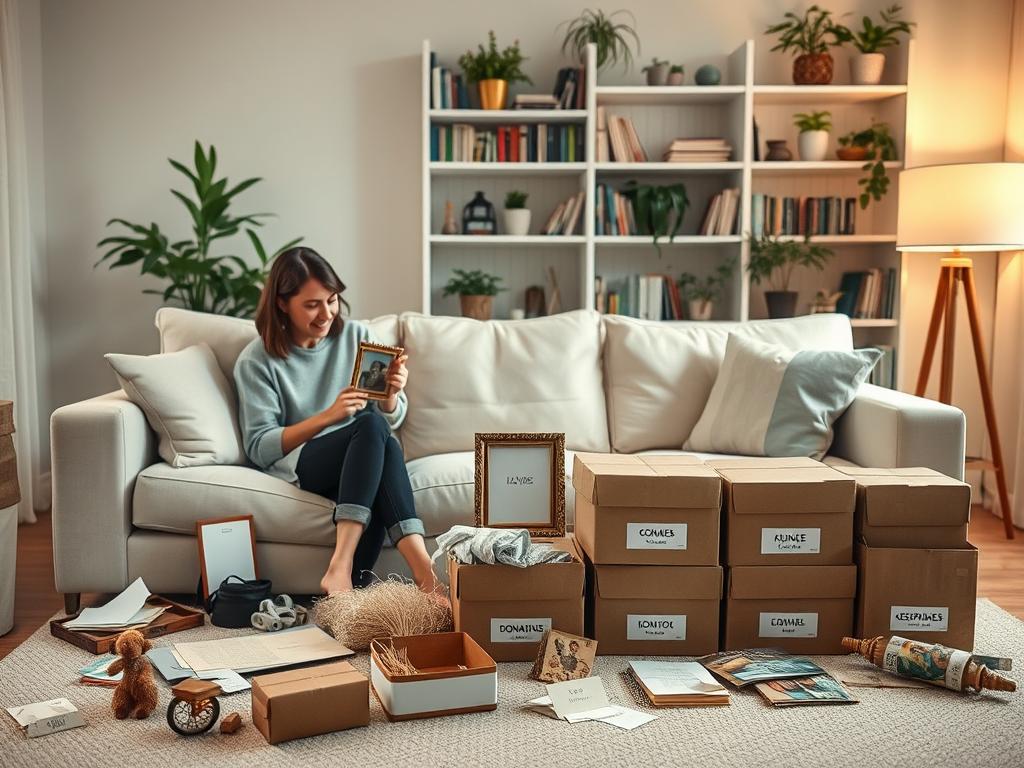
Dealing with sentimental items can be tough. You might feel attached to objects that remind you of special times. But, remember, your memories are inside you, not just in things.
Understanding Emotional Attachments
Sentimental items often hold deep emotional value. These can include:
- Gifts from loved ones
- Childhood toys
- Photographs
- Heirlooms
It’s key to understand the feelings tied to these items. This way, you can cherish their memories while making room for new ones.
Tips for Letting Go
Letting go of sentimental items doesn’t have to hurt. Here are some tips:
- Ask if the item still has a purpose.
- Imagine how your space will look without it.
- Give the item to someone who will value it.
- Take a photo of it to keep the memory alive.
Creating a Memory Box
A memory box can keep special mementos without cluttering your home. Here’s how to make one:
- Choose a box that fits your space.
- Only include a few items that truly matter.
- Label each item with a note about its significance.
This way, you honor your past while making room for new memories. It’s a great way to simplify your belongings.
Make Decisions on Each Item
Deciding what to keep and what to let go can be tough. Minimalist home methods make it easier. By using Marie Kondo techniques, you can see if each item adds value to your life. Here are some strategies to help you decide.
Ask Yourself Key Questions
When you hold an item, ask yourself:
- Does this item serve a purpose?
- Does it bring me joy?
- Am I keeping this out of guilt or obligation?
These questions help you figure out if each item is important in your home.
The “One Year Rule” for Clothing
The “One Year Rule” is also helpful. If you haven’t used an item in a year, it might be time to let it go. This rule stops clutter from building up and helps you keep only what you really need.
Keeping Only What Sparks Joy
Marie Kondo suggests keeping only what sparks joy. This means having things that make you happy and are useful. By doing this, you make your space more positive and fulfilling.
Using these methods lets you choose what’s in your space carefully. Decluttering helps you create a home that shows your values and brings joy.
Organize Your Space After Decluttering
After decluttering, it’s time to organize your living space. Good organization helps you manage only what you really need. It makes your home more functional and enjoyable. Using smart home organization hacks can really improve your space.
The Importance of Effective Organization
Good organization makes finding things easier. An organized home looks better and saves time. You can enjoy your space without searching for lost items.
Best Storage Solutions for Your Home
Choosing the right storage is crucial for keeping your home tidy. Here are some great options:
- Clear bins for easy visibility
- Drawer dividers for quick access
- Storage ottomans for extra function
- Labeling systems for fast identification
Utilizing Vertical Space
Don’t overlook vertical space! Here are some tips to make the most of it:
- Install shelves for books and decor
- Use hooks for hanging items like bags or tools
- Think about tall bookcases for more storage
Organizing your living space well creates a peaceful environment. The right storage and using vertical space keep your home neat and useful. Enjoy a well-organized home every day!
Get Family Involved in the Process
Getting your family involved in decluttering makes it fun and effective. It lets everyone feel like they own the space. You can teach kids about keeping only what brings joy, thanks to Marie Kondo.
Strategies for Team Decluttering
Working together is essential. Here are ways to make decluttering a team effort:
- Set a specific day for decluttering.
- Play upbeat music to create a fun vibe.
- Use timers to challenge each other to declutter quickly.
Assigning Responsibilities
Give tasks based on age and ability. This makes everyone feel included. Here are some ideas:
- Adults can handle larger items and furniture.
- Children can sort through toys and books.
- Teens can manage their own rooms and personal items.
Making it a Fun Family Activity
Turn decluttering into a fun family activity. Reward everyone for their hard work. Consider:
- Offering a treat after a successful decluttering session.
- Creating a friendly competition to see who can declutter the most.
- Celebrating with a family movie night after completing the task.
Using these strategies makes decluttering a bonding experience. It creates a positive environment that encourages keeping your home organized.
Donate, Sell, or Recycle Items
Finding the right home for your unwanted items is key to a clutter-free home. You can help the planet by donating, selling, or recycling. Each choice reduces waste and supports sustainable living.
Best Places to Donate Unwanted Items
Donating gently used items helps others. Here are some top places to donate:
- Local charities and shelters
- Thrift stores like Goodwill or Salvation Army
- Food banks for non-perishable food items
- Animal shelters for pet supplies
How to Successfully Sell Unused Items
Selling high-value items can be rewarding. Here are some good platforms:
- Online marketplaces such as eBay or Facebook Marketplace
- Local consignment shops
- Garage sales or community flea markets
Understanding Recycling Options
Recycling is vital for the environment. Always check local guidelines for:
- Electronics recycling programs
- Hazardous waste disposal options
- Composting organic materials
Donating, selling, or recycling helps the planet and keeps your home tidy. Use these tips to maintain a peaceful and welcoming space.
Maintain Your Decluttered Home
Keeping your home organized is a continuous task. Using room-by-room decluttering strategies helps you stay on track. Simple habits can stop clutter from coming back, keeping your space welcoming and useful.
Tips for Preventing Clutter from Coming Back
Creating daily routines can greatly reduce clutter. Here are some tips:
- Schedule a quick 10-minute tidy-up each evening.
- Regularly check if you still need items in your home.
- Make time each week for a mini decluttering session.
The One-In-One-Out Rule Explained
This effective home organization hack means getting rid of one item for every new one. It promotes careful buying and keeps your space clutter-free.
Regular Maintenance Tips
To keep your home organized, follow these tips:
- Do seasonal decluttering to check your belongings.
- Get your family involved in keeping things tidy.
- Choose storage solutions that fit your lifestyle.
By being careful with what you buy and keeping up with maintenance, your home will stay clean and organized. Use these strategies, and your home will always be a peaceful place.
Celebrate Your Success
Finishing your home decluttering journey is a big win. You’ve worked hard to make your space more organized. It’s important to recognize this effort to keep you motivated.
Give yourself a treat to celebrate. Maybe a nice dinner, a book you’ve been wanting, or a quiet night in your new space. These rewards help you stay committed to a clutter-free home. Remembering how you decluttered will make you feel ready for more.
Now, think about setting new decluttering goals. Start with small, achievable tasks to keep your home balanced. With your skills, you can handle any clutter that comes your way. This keeps your home peaceful and organized.