

Americans spend nearly two hours daily on household chores. That’s over 60 full days a year. Even small changes can make a big difference.
This piece shares weekly practical household time-saving tips. It’s about creating simple, repeatable systems. Think of it as developing routines, using the right tools, and making small habit changes.
Tips here are for busy families, working parents, homemakers, and caregivers. They aim to help manage time better and reduce stress. Topics include schedules, multitasking, decluttering, using technology, laundry, meal prep, cleaning supplies, involving the family, morning routines, and setting time limits.
These tips can help you save hours. This means more time for balancing work and life, improving mental health, and spending with family. The advice is based on U.S. research and proven productivity tips from sources like the Harvard Business Review and Consumer Reports.
1. Create a Weekly Cleaning Schedule
A written weekly cleaning schedule cuts decision fatigue. It prevents chores from stacking up. Having a visible plan means less time guessing and more time doing.
This method promotes effective cleaning routines. It offers solid tips for saving time on busy days. Everyone in the house can see what needs to be done.
Benefits of a Cleaning Schedule
Consistency stops the mess from building up. This means you don’t need long clean-up sessions as much. Doing a bit every day keeps things neat.
Duke University found that small actions often repeated can become habits. This makes managing your time easier. It keeps the family organized.
A set routine reduces stress. It makes juggling work and school simpler. Experts believe a weekly clean can halve your cleaning time.
How to Create an Effective Schedule
First, divide your home into zones. Think kitchens, living rooms, and bedrooms. Then, list tasks by when they need doing: daily, weekly, or monthly.
Give each task a realistic time. Maybe 10 minutes for counters and 20 for vacuuming. This way, you won’t underestimate the work involved.
Pick tools that suit you. Visual types might like printable planners. Others might prefer Google Calendar for shared reminders. Apps like Todoist help with repeating tasks. Spread out big cleaning tasks to avoid a packed weekend.
Tips for Sticking to It
Link chores to your daily habits. Use smart assistants for reminders. Timers and the Pomodoro technique can make cleaning seem less daunting.
Make cleaning a team effort. Share a calendar or have quick meetings to decide who does what. Fun tasks and rewards keep everyone motivated. This keeps you on track and helps everyone stick to the plan.
2. Utilize Multitasking Strategies
Get more done by pairing tasks that fit well together. Use those short breaks wisely. Choose strategies that match how you feel energy-wise. Always pair tasks in a way that maintains quality and safety.
Combine chores for efficiency
While you’re making dinner, run the dishwasher. Start washing clothes before a quick cleaning spree. This approach saves time by reducing the need to switch between tasks. Batching tasks like errands, minor repairs, and managing emails keeps you going without losing focus.
Schedule tasks with downtime
Use the wait times like oven preheats or laundry cycles. In 5–15 minutes, you can achieve a lot: unload dishes, clean surfaces, or organize mail. Plan tough tasks when you’re most alert. Save easier tasks for when your energy dips.
Tools to help you multitask
Smart plugs and timers can manage appliances for you. A robot vacuum can clean without requiring your attention. Voice assistants and apps like Cozi help the family know who should do what.
Here’s a daily plan that pairs chores to save time over the week. Use this as a start to refine your approach for efficient household management.
| Time | Primary Task | Paired Short Task | Tool or Tip |
|---|---|---|---|
| 7:00 AM | Prepare breakfast | Start a load of laundry | Smart plug timer for washer |
| 8:30 AM | Drop kids at school / commute | Quick inbox tidy (5–10 min) | Phone app notifications muted |
| 12:00 PM | Cook lunch | Unload dishwasher while food rests | Run Roomba during cooking |
| 3:00 PM | Kids’ practice | Sort mail or plan meals (10 min) | Use Cozi shared list |
| 6:00 PM | Prepare dinner | Wipe counters and sweep | Kitchen timer for steps |
| 8:30 PM | Evening tidy | Fold laundry (15 min) | Set a 15-minute focused timer |
Try these multitasking ideas for a week. Monitor the time you save. Adjust as needed until it suits you. Even small adjustments can make a big difference, giving you more time for relaxation or hobbies while keeping your home organized.
3. Declutter Regularly
Decluttering saves time and eases stress. It helps you find things easier, clean quicker, and have a peaceful home. Small steps lead to simpler living and makes every day smoother.
The benefits of a clutter-free home
A clean space helps you focus and sleep better. Cleaning takes half the time. It lets you use your space better. You won’t buy things you already have. Tips from Marie Kondo and Apartment Therapy help a lot.
Tips for quick decluttering
- Set a 10-15 minute daily timer to tidy a spot or drawer.
- If you haven’t used something in a year, think about giving it away.
- Have bags for donations ready and take them to Goodwill or Salvation Army regularly.
- Follow a one-in, one-out policy to avoid clutter.
How to maintain an organized space
Make specific spots for mail, keys, and chargers. Use clear bins and labeled baskets for easy sorting. You can find these at The Container Store or IKEA.
Check different areas of your home each season. Have a checklist for quick clean-ups once a week. These tricks make staying tidy easy and fun. Begin with a small step today for lasting simplicity.
4. Embrace Technology in the Home
Adding technology into your day-to-day activities can save you a lot of time every week. Begin with simple gadgets that make daily tasks easier, reduce the need to go out, and keep your family organized. This way, you can start using technology at home without feeling stressed.
Smart Home Devices That Save Time
Devices like the iRobot Roomba and Roborock keep your floors clean while you’re busy with other things. Gadgets such as Nest thermostats and Ecobee adjust your heating without you needing to do anything. Items like smart plugs, voice-activated lights, and automated slow-cookers take care of the little things.
Samsung and LG offer washers and dryers that save time and can be controlled via apps. It’s important to keep these devices updated to ensure they remain secure while being convenient.
Apps for Household Management
Cozi centralizes your family’s schedules and shopping lists. Apps like OurHome and ChoreMonster get kids excited about doing chores by making them fun. Plans for meals and groceries become simpler with tools like Paprika, Mealime, or Yummly.
To manage tasks together, use Todoist, Microsoft To Do, or Google Keep. These apps reduce misunderstandings and keep everyone up-to-date on their responsibilities. This makes it easy to follow time-saving strategies at home.
Online Grocery Shopping Benefits
Using apps like Instacart, Walmart Grocery, and Amazon Fresh saves time and stops unnecessary purchases. Picking up your groceries is often cheaper and quicker. Delivery is the best choice when you’re really busy.
To save more, book deliveries in advance, use digital coupons, and subscribe for regular items. Start with one tech tool and app to see how online shopping can fit into your life without overwhelming you.
5. Optimize Your Laundry Routine
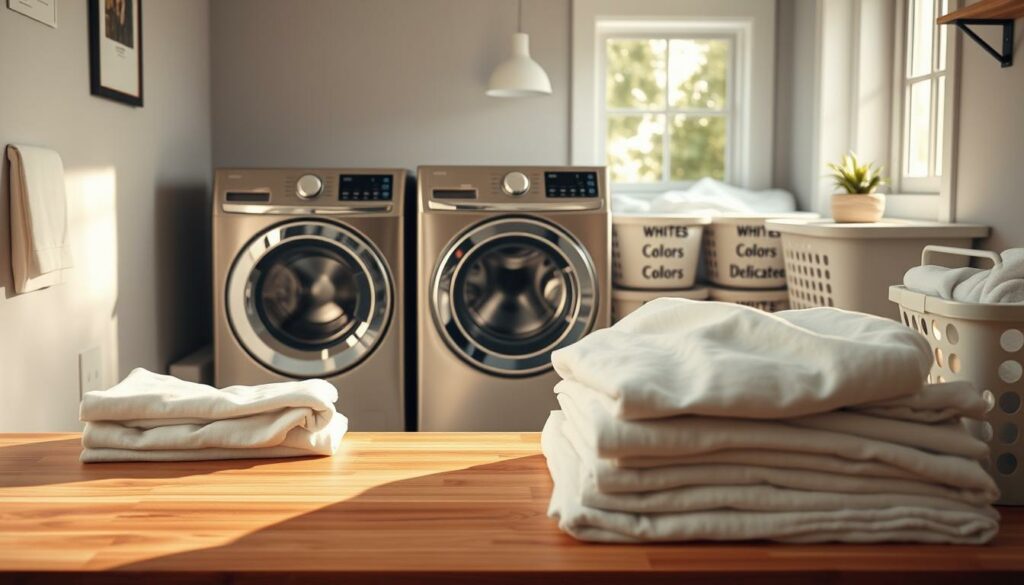
Make laundry less daunting with a simple system. Dedicate one day for laundry. Split the loads throughout that day. Use quick washes for items that aren’t very dirty. These steps make laundry easier and give you time for other things at home.
Simple Tips for Sorting Laundry
Get a laundry sorter with sections for lights, darks, and delicates. Place it in a central location. It saves time before washing and reduces sorting errors.
Keep a stain remover like OxiClean or Shout near your sorter. This helps treat stains fast, avoiding extra washes and protecting your clothes.
Always try to run full loads, but don’t overload your washer. Balanced loads clean better. This extends the life of your clothes and appliance.
How to Speed Up Folding Clothes
Fold clothes right after drying to avoid wrinkles. Using a tool like FlipFold or the KonMari method helps fold faster.
Have everyone in the house fold their own clothes. This saves you time. It also teaches valuable time-saving skills.
Use drawers or cubes to organize folded clothes. This keeps things tidy and reduces the time you spend putting laundry away.
Techniques for Reducing Ironing Time
Use steam cycles to lessen ironing. Hang clothes right after drying. Smooth them with your hands to save ironing time.
Opt for wrinkle-resistant clothes for daily wear. Fabrics like polyester blends need less ironing, which is great for busy people.
Consider a steamer for quick fixes. Set aside 15–20 minutes weekly to iron only the necessities.
Below is a comparison to help decide on the best upgrades for your laundry routine.
| Upgrade | Time Saved Per Week | Cost Range | Best For |
|---|---|---|---|
| Divided laundry sorter | 15–30 minutes | $30–$80 | Homes with multiple family members |
| Stain remover station (OxiClean, Shout) | 10–20 minutes | $10–$25 | Active households with kids or sports gear |
| Folding board (FlipFold) | 20–40 minutes | $15–$35 | Anyone seeking uniform folds quickly |
| Garment steamer (Conair, Jiffy) | 30–60 minutes | $40–$200 | Professionals and frequent dressers |
| Wrinkle-resistant wardrobe | Varies; reduces daily ironing | Depends on clothing choices | Busy adults wanting low-maintenance clothes |
Following these organizational tips will help streamline your laundry process. It gives you more time during the week. Plus, it helps with managing your home more efficiently.
6. Meal Prep Like a Pro
Plan your meals once a week and eat well without hassle. This way, you make fewer decisions, waste less food, and run your home smoothly. Plus, your meals will be delicious and different every time.
Planning Meals for the Week
Use themes like Meatless Monday or Taco Tuesday to make deciding what to cook easy. Make a big grocery list that includes basics like rice and eggs. Use apps or a shared Google Sheet to keep track and let everyone pick their favorites.
Quick Recipe Ideas for Busy Days
Have quick meals ready, like stir-fries or pastas, that take 20–30 minutes. Cook proteins and grains in bulk to use in different meals. Try Mason-jar salads or Instant Pot soups for meals you can grab and go.
Storing and Reheating Meals Efficiently
Store food in airtight, safe containers and always label them. Serve meals in single portions to heat up only as much as you need. Use the oven for casseroles and the microwave for fast heating.
Freeze food in parts and thaw in the fridge as needed. Don’t refreeze food to keep it tasty and safe. This method saves time, cuts down on eating out, and gives you more time for fun.
Start meal prepping like a pro to make your week easier. These simple steps can make a big difference, saving you time and stress. Plus, you’ll get to enjoy fresh, homemade meals every day.
7. Streamline Your Cleaning Products
Having fewer supplies saves time deciding and boosts your cleaning routine’s efficiency. A small, effective toolkit minimizes mess. This makes it simpler to quickly take on small or larger cleaning tasks.
Start with essentials: an all-purpose cleaner like Method or Mrs. Meyer’s, microfiber cloths, disinfecting wipes, and sponges. Include top-notch vacuums such as Shark or Dyson, a mop, a toilet brush, glass cleaner, and a shower squeegee. Also, have a grout brush and an extendable duster within easy reach.
Opt for eco-friendly products to reduce environmental impact. Invest in a good vacuum but save on basic cleaners. Using refill packs saves money and reduces waste. This strategy helps save time, cuts back on needing new items often, and simplifies buying more.
DIY cleaning solutions to save money
Homemade cleaners work great. Mix vinegar and water to clean windows and many surfaces. However, don’t use vinegar on natural stone. Use baking soda paste for scrubbing, and lemon to freshen drains and cutting boards.
Be cautious: mixing bleach with ammonia or vinegar is dangerous. For a nice smell and some germ protection, add essential oils like tea tree or lavender to homemade mixes. These DIY options save money and keep your home smelling fresh.
Organizing your cleaning supplies
Use portable caddies to easily move supplies around. Store everyday items under the sink or in a nearby closet. Keep lesser-used tools on high shelves to keep common items within reach.
Mark shelves and bins for easy identification. Choose see-through bins from The Container Store or Amazon for quick content checks and refills. Refillable cleaners and concentrated solutions cut down on waste. They keep your home clean and organized.
| Category | Suggested Items | Why It Helps |
|---|---|---|
| Daily Essentials | All-purpose cleaner, microfiber cloths, disinfecting wipes, sponges | Saves time on routine wipes and spot cleaning; supports efficient cleaning routines |
| Heavy-Duty Tools | Shark or Dyson vacuum, mop, toilet brush, squeegee | Invest once for better performance; reduces time spent on deep cleans |
| Specialty Items | Grout brush, extendable duster, glass cleaner | Targets problem areas fast; avoids multiple products for one task |
| DIY Supplies | Vinegar, baking soda, lemons, essential oils | Low-cost, multiuse solutions that support household time saving tips |
| Storage & Sustainability | Portable caddies, stackable bins, labeled shelves, refill concentrates | Makes restocking simple and keeps your streamline cleaning products organized |
8. Involve the Whole Family
Getting everyone involved makes chores a team effort, saving time and teaching responsibility. Simple rules clarify everyone’s tasks. This method improves time management and helps create lasting routines for families.
Give chores based on age and what each person can do. Little kids can tidy up toys and put clothes away. Kids in school can handle making their beds and setting the table. Teens can tackle vacuuming, handling the dishwasher, or cutting the grass. Check the American Academy of Pediatrics to see which chores fit each age group.
Changing chores every week keeps things interesting and teaches new skills. Track chores with a chart or an app everyone can see. This helps everyone become more responsible. Plus, it means you spend less time managing chores.
Turn cleaning into a game. Blast fun music, race the clock, or give small prizes. Use apps like OurHome and ChoreMonster for a game-like experience that keeps chores engaging.
Have a family meeting every week to pick roles and look over the schedule. Provide rewards that mean something in your house, like more time to watch TV or a bit of extra allowance for finishing chores. Show how it’s done with a quick clean-up and always celebrate effort over being perfect.
When the family works as one, you save hours each week. Helping out develops your kids’ problem-solving skills and independence. These benefits are essential for saving time and managing a busy family’s schedule.
9. Maximize Your Morning Routine
Small steps in the morning can avoid rush and give extra time for important things. Follow easy, repeatable actions to improve your morning routine and lower stress before starting your day.
Establishing a Consistent Schedule
Make a quick plan for your morning: wake up, personal care, stretch for five minutes, have breakfast, and get ready to go. Plan your time in blocks of 10 to 15 minutes to stay organized.
Use gentle alarms that you have to walk to turn off. In busy homes, assign easy jobs to everyone so all know what to do.
Preparing the Night Before
Choose your outfit, prepare lunches, and put school or work bags by the door the night before. Spend 15 minutes tidying up common areas to avoid messy mornings.
Set reminders on your phone or write down tasks for the next day. These tips save time and make your morning smoother.
Quick Breakfast Ideas for Busy Mornings
Have quick breakfasts ready like overnight oats, yogurt parfaits, egg muffins, and pre-made smoothie packs. Make and freeze breakfast burritos or sandwiches and label them with reheating instructions.
Set your coffee maker to start automatically. Use a toaster oven for quick warm-ups. These ideas ensure a good breakfast even when you’re short on time.
A 15-minute checklist for the night and a quick morning routine helps a lot. These tips ensure a smooth start to the day, keeping mornings calm and efficient for families.
10. Set Time Limits for Household Tasks
Setting time limits for chores changes how they integrate into your day. Using time blocking and short timers makes cleaning focused work, not never-ending. It stops you from trying to make everything perfect and shows quick progress.
Benefits of Time Blocking
Time blocking stops tasks from taking more time than necessary, which is a smart way to beat Parkinson’s Law. It creates set times for chores, making room for work and family. Techniques like the Pomodoro Technique make your progress easy to see and keep you motivated.
Techniques for Staying Focused
Use timers from your kitchen or phone, or apps like Forest, for 15–30 minute focus sessions. Turn off things that can wait and let your family know when you’re focused. Always start with the most important task to make the biggest impact.
Celebrating Completed Tasks
Celebrate the little achievements by checking things off a list or enjoying a quick reward. In family settings, pick a weekly reward for hitting goals together. Keeping track of time saved over weeks shows clear benefits and keeps everyone motivated.
Combine time management with your weekly plans, multitasking, and family help for top-notch time-saving tips. Try out different block lengths and routines to find what works best for you. Including short, focused work periods in your routine saves time and puts you in control of home tasks.