

80% of home cooks say they avoid cooking due to a cluttered kitchen. Yet, small habits can change that. By using simple kitchen cleaning hacks daily, you can reduce cleaning time and stress.
A tidy kitchen is important for more than just appearance. It means less bacteria, and less grease and mold buildup. This helps appliances last longer. Plus, following quick cleaning tips makes meal prep easier and improves food safety, keeping pests at bay.
This guide offers easy solutions and kitchen cleaning tricks to save time. It includes steps for organizing, setting routines, efficient dish washing, and appliance care. Plus, tips for cleaning as you cook are also provided.
Read the entire guide or skip to sections you need. Either way, you’ll get a system of easy, repeatable steps. These steps make it easy to keep your kitchen clean without taking up your whole afternoon.
1. Organize Your Cleaning Supplies for Efficiency
Get your cleaning supplies ready, so you don’t waste time looking for them. A well-organized caddy makes cleaning quicker. It helps with kitchen cleaning tricks that are both fast and easy.
Create a Cleaning Caddy
Fill a caddy with everything you need for cleaning counters, stoves, fridges, and sinks. Include cleaners like Method or Mrs. Meyer’s, glass cleaner, disinfecting wipes, cloths, brushes, a sponge, gloves, a scraper for tough spots, and vinegar spray for a natural option. Store it where you can easily grab it, like under the sink.
Use Multi-Purpose Cleaners
Opt for cleaners that work on many surfaces to simplify your cleaning. Brands like Simple Green and Mrs. Meyer’s are great for most areas. Use stronger cleaners like Zep or bleach solution for tough grease or when you need to disinfect. This way, you won’t have to switch products as you clean.
Stock Up on Essential Tools
Have tools like microfiber cloths, a good dish brush, a strong sponge, a mop or steam mop, and a handheld vacuum ready. Add scrub pads for tough cleaning. Keep sponges fresh and cloths clean to avoid germs. Use labeled bins or clear containers for storing extras, ensuring you always have what you need.
Consider eco-friendly cleaning mixtures like vinegar, baking soda, and lemon for a safe, effective clean. These options are great for a mild, natural cleaning method.
2. Tackle the Mess with a Routine
Start keeping your kitchen in shape with a daily short, consistent routine. Spending 10–15 minutes every day on a quick clean prevents messes from piling up. It helps make thorough cleanings less of a chore. Use tricks like setting a timer and keeping cleaning supplies handy. This helps you move quickly and stay on track.
Daily Quick Clean
Immediately after eating, clear and clean counters to get rid of crumbs and spills. Make sure to load the dishwasher and start it when it’s full. Quickly wipe the stove and any new splatters to avoid permanent stains. Sweep or mop areas that get a lot of foot traffic to keep dirt from spreading. Always empty the sink and drying rack, and take out the trash if needed.
Make each task short and clear. Apps like Google Keep or Todoist can help you keep track of what you’ve done. Adding a favorite song or podcast can make cleaning for 10–15 minutes feel faster and more enjoyable.
Weekly Deep Cleaning Schedule
Set aside 45–90 minutes each week for bigger cleaning tasks. Clean your microwave inside and spot-clean your oven. Wipe down cabinet fronts and the backsplash. For the sink and faucet, use a mix of baking soda and vinegar. Don’t forget to clean small appliances, like toasters or coffee makers. Finish by thoroughly mopping floors and washing the trash can.
To avoid a long cleaning day, split tasks over the week. For instance, clean appliances on Monday, cabinets and backsplash on Wednesday, then floors and trash can on Friday. Use hacks like soaking difficult pans while you work on something else. This saves time.
Use timers for each task to keep track of time. Get your tools ready beforehand with a caddy from Section 2. This stops you from wasting time. Get others in your home to help with simple tasks. These strategies make weekly cleaning easier and keep your kitchen tidy for the coming week.
| Task | Frequency | Estimated Time | Tip |
|---|---|---|---|
| Wipe counters and stove | Daily | 5–10 min | Use a microfiber cloth and a gentle spray |
| Load or run dishwasher | Daily | 2–5 min | Run at night to free daytime space |
| Sweep/spot-mop high-traffic areas | Daily | 5 min | Keep a small broom and dustpan near the exit |
| Clean microwave and spot-clean oven | Weekly | 10–15 min | Steam with a bowl of vinegar water for easy wiping |
| Wipe cabinet fronts and backsplash | Weekly | 15–20 min | Use a mild cleaner to protect finishes |
| Deep-clean sink and faucet | Weekly | 10–20 min | Use baking soda and vinegar for stubborn stains |
| Clean small appliances | Weekly | 10–15 min | Unplug before cleaning and wipe removable parts |
| Mop floors thoroughly | Weekly | 20–30 min | Use a microfiber mop and circular motions |
| Clean trash can | Weekly | 10 min | Rinse and spray with disinfectant; dry in sun if possible |
| Defrost or check refrigerator | Weekly | 10–20 min | Remove old food and spot-clean spills |
3. Efficient Dishwashing Techniques
Keeping your dishes organized saves you time and keeps your kitchen neat. Follow simple steps that combine easy cleaning solutions with smart habits. These tips reduce the time you spend scrubbing and let you enjoy cooking more.
Soak Before Scrubbing
Soak your pans and dishes as soon as you’re done using them to make cleaning easier. Hot water and a bit of dish soap can quickly soften hard grime. For tough spots, a paste of baking soda and water works well if you let it sit for a while.
When cleaning cast iron, skip the heavy soap. Just use hot water and a brush. Then, dry it and apply a thin oil layer to keep it in good shape.
Organize Dishes by Size
Start washing with items that are less greasy, like glasses and cutlery, and move to greasier ones, like pots. This method stops grease from spreading and makes cleaning more effective.
In the dishwasher, group similar items together to ensure clean results. Placing items correctly is key to having perfectly clean dishes.
Rinse and Load Strategically
Quickly scrape leftovers into a trash bowl before washing. Only do a quick rinse to get rid of loose bits. Arrange dishes so the dirty parts face the water spray but don’t overcrowd.
When loading the dishwasher, put sharp knives with the handle up for safety. If washing by hand, use a two-basin system for washing and rinsing. This makes rinsing more effective.
Time-Saving Products and Tips
Try dishwasher pods from Cascade or Finish for reliable cleaning. Using a rinse aid helps dishes dry faster and avoids water spots. Pick a dish rack that allows air to circulate well for quicker drying.
Mix these simple cleaning solutions with the best methods to reduce the time you spend on dishes. Keep your sink area clean every day easily.
4. Mastering the Art of Surface Cleaning
Keep surfaces clean to cook faster and safer. Include smart, repeatable steps in your routine. These kitchen cleaning hacks simplify counter care and keep away germs.
Clean spills right away. For granite, use a pH-neutral cleaner like Granite Gold. For laminate, a mild spray is best. Wipe away food and grime, then use a disinfectant on food areas. Follow the product’s contact time for best results.
Baking soda can remove stains from counters, sinks, and cookware. Mix it with water to make a paste. Spread on stains, wait 10–15 minutes, scrub, then rinse. For grease, add dish soap to the mixture. These tricks are cheap and safe for many surfaces.
Microfiber cloths beat paper towels for grease and streaks. They pick up oils and bacteria and reduce waste because they’re washable. Use paper towels for big spills or meat juices. For daily use, pick microfiber. Wash them in hot water but skip fabric softener to keep them absorbent.
Stainless steel gets fingerprints and streaks easily. Always wipe with the grain. Then, use a dry microfiber cloth to buff. If stains stay, use white vinegar solution, wipe, and dry. For wooden boards, use salt and lemon to clean. Rinse, dry, and use mineral oil to stop cracks.
Here’s a quick guide for caring for different surfaces.
| Surface | Best Cleaner | Fast Tip |
|---|---|---|
| Granite | pH-neutral cleaner (Granite Gold) | Wipe spills immediately; avoid acidic cleaners |
| Laminate | Mild all-purpose cleaner | Use microfiber to prevent streaks |
| Stainless Steel | Diluted white vinegar | Wipe with the grain; buff dry |
| Wood Cutting Board | Coarse salt + lemon; mineral oil | Scrub to deodorize; oil after drying |
| Sinks & Cookware | Baking soda paste; dish soap for grease | Let paste sit 10–15 minutes before scrubbing |
Use these kitchen cleaning tips weekly for fresh and safe surfaces. Small steps make big differences, making cleanup easier and quicker.
5. Smart Strategies for Cooking Utensils
Having your utensils ready to go saves time and reduces stress post-dinner. It’s good to use simple steps that go well with kitchen cleaning hacks and methods. These little habits you start can help save time when cleaning your kitchen later.
Begin by soaking your pots and pans while you enjoy your meal. Just fill them with hot, soapy water or a baking soda solution right after you’re done cooking. For anything burnt, boil some water and baking soda for a few minutes. Then let it cool down. This helps loosen up the bits and makes scrubbing easier.
Quickly scrape off and throw away food leftovers. Use something like a silicone bench scraper to clean plates and pans into a bin. Make sure to rinse cutting boards and utensils right away. This stops stains and bacteria from growing. It’s a good way to keep odors and critters away.
Look after different materials the right way to make them last longer. Wash wooden items by hand and let them air dry. Treat them with mineral oil now and then to prevent cracks. Make sure silicone and plastic utensils are dishwasher safe to save time. Always hand-wash knives and dry them immediately for sharpness and safety.
Organize your utensils for easy grabbing and drying. You can use a rack or drawers with sections. Try not to cram things together so everything can dry well and stay easy to find. Keeping things tidy fits with smart cleaning methods. This makes your day-to-day kitchen tasks go smoother.
Here’s a quick guide for taking care of your utensils. You can use it to easily check how to clean or store your kitchen items.
| Utensil Type | Quick Care | Deep Care | Storage Tip |
|---|---|---|---|
| Stainless Steel Pots & Pans | Soak hot soapy water immediately | Boil water + baking soda for burnt spots, then soak | Air-dry on rack; stack with liners |
| Nonstick Cookware | Cool slightly, then hand-wash with soft sponge | Use baking soda paste for stubborn marks | Store flat or hang to avoid scratches |
| Wooden Utensils | Hand-wash and air-dry immediately | Occasional mineral oil treatment | Keep upright in a dry holder |
| Silicone & Plastic Tools | Rinse and load in dishwasher if labeled safe | Soak in warm water; sanitize if stained | Use drawer dividers to prevent deformation |
| Knives | Hand-wash and dry right away | Sharpen periodically and sanitize handles | Store in a block or magnetic strip |
6. Keeping Your Refrigerator Clean
A tidy fridge saves time, reduces wasted food, and promotes safety. Establish a cleaning routine to follow every week or two. This will avoid bad smells and spoiled food. Small, regular habits make cleaning easier, even on busy days.
Regularly Check Expiration Dates
Make it a habit to check your fridge every two weeks or each month. Take everything out to check expiration dates and throw away anything that’s no longer good. Use clear bins to keep similar items together, so you don’t lose anything.
Label leftovers with dates on masking tape or reusable stickers. This helps you remember what to eat and matches well with tips like keeping a list on the fridge door of things to use soon.
Clean Spills as They Happen
Don’t let sticky spills sit. They cause bad smells and allow bacteria to grow. Clean them right away with a gentle cleaner or vinegar to prevent stains and keep your fridge working well.
Take out shelves and drawers to clean them with soapy water now and then. For ongoing smells, try putting an open box of baking soda inside. Change it every three months.
For deeper cleaning, try mixing baking soda with warm water. Use one tablespoon of baking soda per quart of water. Clean the fridge inside with this, dry shelves well, and put everything back.
Quarterly Deep Clean and Safety Tips
Empty and clean your fridge completely every three months. Dry it well to stop mold. Vacuum the coils to help your fridge run smoothly.
Always put raw meat on the bottom shelf to avoid contamination. Keep jars from tipping and check the temperature regularly; it should be 40°F or lower for safety.
| Task | Frequency | Why It Matters |
|---|---|---|
| Quick sweep for expired items | Every 1–2 weeks | Prevents food waste and reduces odors |
| Wipe spills | As they occur | Stops bacteria and sticky stains |
| Wash shelves and bins | Monthly | Removes residues and lingering smells |
| Replace baking soda | Every 3 months | Neutralizes odors naturally |
| Deep clean and coil vacuum | Quarterly | Boosts performance and extends fridge life |
| Temperature check | Weekly | Ensures food stays at safe temperatures |
Follow these top tips and hacks for cleaning your kitchen to keep your refrigerator in great shape. Include natural cleaning solutions when possible to avoid harsh chemicals and keep your food storage area fresh.
7. Time-Saving Appliance Care
It’s smart to keep small appliances clean to save time and make your kitchen more sanitary. Simple steps avoid mess and expensive fixes. These quick cleaning tips also make your appliances last longer.
Regular Maintenance for Small Appliances
Every month, clean your coffee maker with water and white vinegar mixed equally. Then, run it with only water twice to rinse. This stops bad tastes and keeps it from getting blocked.
To clean your microwave, heat water with lemon for 2–3 minutes. The steam makes wiping away food easy. Clean the turntable and door seals in the same way.
Always unplug toasters and toaster ovens before emptying crumbs. If there’s a crumb tray, take it out for cleaning. This helps prevent smells and fire hazards.
Take apart blenders and food processors after using them. Wash removable parts and blend warm, soapy water in the jug. After rinsing, dry everything before putting it back together.
Check appliance seals and cords each month. An in-depth cleaning or inspection every six months or annually should include deep cleaning coffee makers and checking gaskets. These quick checks and cleanings keep things working right and avoid unexpected problems.
Clean the Oven with Baking Soda Paste
Mix baking soda and water to a spreadable paste. Spread it inside a cool oven, but avoid the elements. Leave the paste overnight to work on tough grease.
Then, spray vinegar to react with the baking soda paste. The reaction helps remove grime. Wipe it clean with a cloth and scrub any hard-to-clean spots carefully.
For really tough grease, a strong cleaner like Easy-Off might be needed. Always wear gloves and open windows for air when using it, following the directions carefully.
Keep the outside of appliances clean to keep your food safe. Clean buttons and screens gently to keep them working well. These tips help you maintain your appliances and save you from long cleaning jobs.
8. Cleaning as You Cook
Keeping your prep area clean as you cook reduces stress. It saves time too. With a few smart habits, cleaning after meals becomes quicker.
Use a Trash Bowl
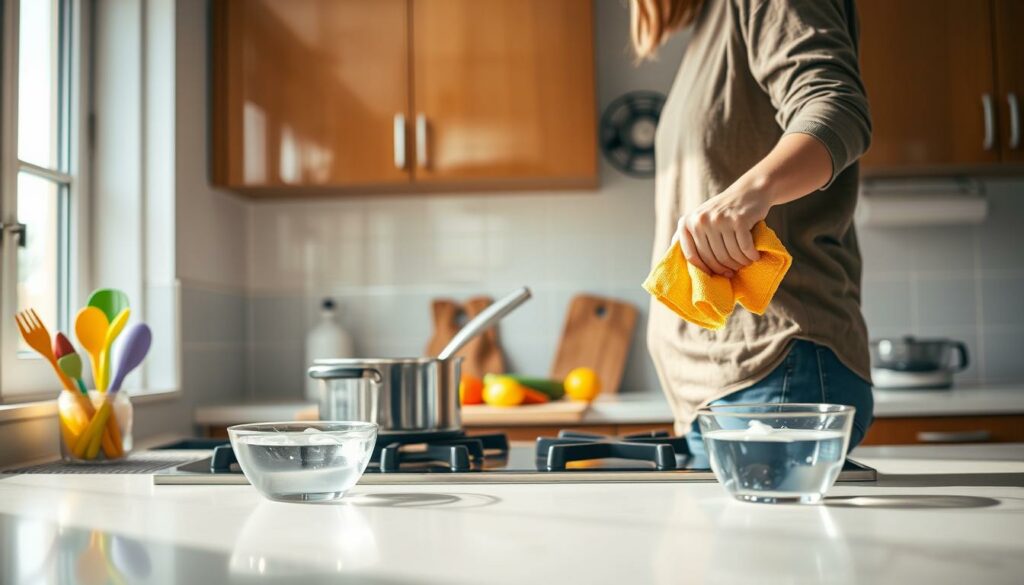
Keep a large bowl near where you chop to gather peels and wrappers. A bowl with a lid can keep smells in check. This trick decreases trips to the trash and keeps your counter tidy.
For those who compost, putting organic waste in compostable bags is earth-friendly.
Rinse and Store Ingredients Immediately
Wash fruits and veggies and put things away right after using them. Use a salad spinner or towel to dry them and then store properly. This helps keep the kitchen tidy and avoids messy spills.
Clean Incrementally
Use waiting times, like when your food is simmering, to clean up a bit. Wash dishes or tidy up. This prevents a big mess at the end.
Efficiency Tips
- Prep ingredients in advance to avoid clutter and keep things handy.
- Do two tasks at once, like preheating the oven while cleaning tools.
- Use silicone mats or foil liners for easy cleanup after baking.
- Have a place near the sink for cleaning supplies for quick washes.
Adopting these smart cleaning tips can make cooking easier. They help keep your kitchen tidy and leave more time to enjoy your meal.
9. Enlist Family Members for Teamwork
Get everyone to help and make kitchen work fast and shared. Talk about who can do which tasks. Make sure tasks are easy and suit everyone’s skills. Kids can handle plates, clean counters, and sort recycling. Teens and adults can manage the dishwasher, sweeping, and cleaning appliances.
Change up cleaning roles to keep things fair. Use a chart on the fridge or apps like Cozi and OurHome to keep track of who does what. Tell each person exactly what you expect from them. Give them the proper tools, like safe cleaning sprays and small aprons. Show them how to do their tasks until they get the hang of it.
Turn cleaning into a fun activity to get everyone excited. Try a 10-minute cleaning race, play fun music, or have a family leaderboard with rewards. Doing these quick cleaning sessions after meals stops mess from piling up. It also teaches important skills and shows how to clean the kitchen fast.
The benefits are great: quicker cleaning, no one is overloaded, and the kitchen stays nicer. Compliment everyone’s effort, keep tasks short, and use tricks like working in pairs to make cleaning faster. This helps create good habits that last.