
It’s amazing, but true: nearly 90% of an average American’s time is spent inside. Knowing how to enlarge the look of a room can seriously increase comfort without the big cost of renovating.
You don’t need a big house to enjoy a spacious feeling. Simple changes like paint, better lighting, and using mirrors can make a huge difference. Smartly placing your furniture and organizing closets also enhance the room’s flow and feel.
These affordable tricks are great for any living space, be it an apartment, condo, or small home. You’ll find cleaning becomes easier, your comfort improves, the place looks better for resale, and moving around gets simpler.
This guide offers organization tips and decluttering ideas. Some are quick fixes for a weekend, others are longer projects over months. We’ll explain how to make rooms look bigger with color, lighting, and how to arrange your furniture and storage smartly.
Looking for useful, easy tips you can start using today? By the end of this, you’ll know how to organize and declutter to make your home feel more open and serene.
Understanding Spatial Perception
Changing paint or moving furniture? It starts with understanding how your mind sees a room. Spatial perception decides if a space feels welcoming or tight. Design experts from Houzz and Architectural Digest use simple tricks to make small rooms look spacious without big changes.
The Psychology of Space
Our eyes use depth, contrast, and what we can see to judge space size. Matching colors and patterns helps the eye move smoothly, making areas seem larger. But clutter and sharp contrasts can make that feeling vanish.
The size of your furniture is key. Too big, and it eats up space. Pick items that fit your room’s size to keep it feeling right. Good design leads the eye easily from one part of the room to another, making it appear larger.
How Light Affects Perception
Natural light makes rooms feel more open by balancing light and dark areas. Spaces filled with daylight are more welcoming, helping small areas seem bigger with less work.
Use different types of lighting. General lighting brightens, while spotlights and accent lights eliminate shadows. Choosing the right lights, like recessed or floor lamps, can really open a space.
The color of your lights matters, too. Warm tones make things cozy but might feel smaller. Cooler, balanced lights between 3000–5000K make a room feel open and fresh. Dimmers let you adjust the mood without affecting space perception.
Remember these tips for organizing small spaces. The right choice in lights, furniture scale, and clear views can make a big difference. This way, any changes you make later will work better, creating rooms that feel both larger and more welcoming.
Use Light Colors for Your Walls
Choosing the right paint makes any room seem larger. Walls in light colors reflect both natural and artificial light. This reduces visual clutter and highlights furniture and floors. Try paint swatches in both morning and evening light. See how colors change throughout the day.
Best Color Choices for Small Rooms
Go for pale whites, warm creams, and gentle pastels like pale blue, mint, or blush. Light grays also work well. These colors make small spaces appear bigger. A palette with little color variation gives the illusion of more space.
Stay away from dark, bold hues on every wall. If bold is your style, use it on just one accent wall or a vertical space. This adds depth but keeps the space open.
Light colors should continue inside closets during a makeover. This keeps the closet organized looking sharp. It also makes the space feel larger and more open.
The Power of Neutrals
Neutral colors like beige, taupe, soft gray, and warm white offer a timeless look. They make any room feel open and peaceful. Brands such as Benjamin Moore, Sherwin-Williams, and Behr have light neutral collections. These are favorites among designers for small spaces.
Neutrals work great as a base. They allow for adding textures and color accents easily. Using neutral colors in connecting rooms creates a seamless flow. This makes your home feel both larger and more connected.
Always test paints before fully committing. This is crucial when planning a closet makeover or updating main rooms. Coordinated colors and finishes save time and look great.
Optimize Your Furniture Arrangement
Smart furniture setup can make tight rooms feel peaceful and usable. Think about how people move and look around. Having clear paths and items that don’t seem heavy helps enlarge the room and keeps it organized.
Create Open Pathways
Try to have 2–3 feet of clear space for walking. This stops people from bumping into each other and lets the eye move freely. When large furniture blocks the view, it makes even big rooms feel full.
Arrange chairs and sofas to look at something interesting, like a window or TV. Make sure there’s room to walk behind them. Moving furniture from the walls can also make the room seem larger and more inviting.
Use a rug to tie together seating areas, with the front legs of furniture on it. This trick makes a space feel organized and less cramped, helping with efficient use of small areas.
Key Furniture Placement Tips
Choose furniture that fits the size of the room. Pieces with lower heights and thin arms make the floor seem bigger. These options also help make the space less crowded.
A slim console behind the sofa adds storage without crowding the room. Furniture that’s clear or made of glass, like certain chairs or tables, makes the room look more open.
Spread out big pieces along a wall or in a corner rather than the middle. Steer clear of putting too much stuff in one spot; a balanced layout makes any space feel lighter and more spacious.
Test out rearranging furniture: move a big piece, change the direction of chairs, or take something away to see how it feels. Small changes can show what helps with organization and what doesn’t work well with storage hacks.
Choose Multifunctional Furniture
Picking the right pieces saves space and maintains a tidy appearance. With multifunctional furniture, you get comfort and smart storage solutions. These pieces also offer flexible layouts, making spaces appear larger without expensive changes.
Begin with items that serve multiple purposes. Consider a sofa bed or a daybed that includes storage underneath for practicality. Lift-top coffee tables and tables that nest can expand your surface area as needed and minimize clutter when they’re not in use.
Ottomans with storage inside can conceal items like blankets or toys. This keeps your living area neat and organized.
Choose wall-mounted desks and foldable chairs to free up floor space when they’re not being used. Murphy beds and loft beds with desks are perfect for small spaces. Convertible dining tables are great for adjusting to your needs, expanding for gatherings and saving space on regular days.
For options and pricing, consider looking at IKEA, West Elm, and Wayfair. They have practical items and shelves that fit well in various room types.
Examples you can try:
- Sofa beds and daybeds with drawers are ideal for guest rooms.
- Lift-top coffee tables and nesting tables offer adjustable surface space.
- Space-saving choices like wall-mounted desks, folding chairs, and Murphy beds are great for small apartments.
- Loft beds with desks underneath combine sleeping and working areas efficiently.
- Ottomans with hidden storage help keep your space tidy.
Modular designs provide flexibility as your needs evolve. Systems like IKEA’s BESTÅ and PAX, along with Elfa and The Container Store units, are adaptable. They allow you to add or remove sections as your lifestyle changes, perfect for fitting into tight spaces or rearranging with a move.
These modular items are also durable and offer great long-term value. Opting to upgrade parts rather than replacing entire pieces saves money and reduces waste. They come with adjustable shelvings and drawers, which are great for closet organization, maximizing space, and keeping items within reach.
Adopt these strategies to merge functionality with aesthetics. Furniture that has more than one use helps keep your living area uncluttered. This approach improves room flow, creates the illusion of more space, and ensures practical storage for day-to-day use.
Incorporate Mirrors Wisely
Mirrors can make a small room feel larger and more open. They do this by reflecting light and extending visual cues. It’s best to go for thin frames or no frames at all. This keeps the view uncluttered.
How Mirrors Help Light and Depth
Mirrors bounce light around, reaching into every corner. This makes spaces seem larger and distances appear further. Using full-length mirrors or mirrored furniture can also help.
Avoid placing mirrors where they’ll catch glaring light. A mirror in the right spot can enlarge a space without remodeling. Mirrored items keep a place tidy by showing items without the clutter.
Best Spots to Place Mirrors
Putting a mirror opposite or near a window works wonders. It spreads daylight and lights up darker spots. In entryways, a mirror adds openness and welcomes more light.
A large mirror propped against a wall is an easy fix if hanging isn’t an option. Mirrors at hallway ends make the space seem longer.
Practical Uses and Cautions
Mirrored closet doors are great for bedrooms, combining style and functionality. Choose durable mirrored furniture from places like IKEA or West Elm. This adds style without sacrificing quality.
Be mindful of mirror placement. Avoid showing clutter or awkward angles. Use strong anchors for large mirrors and opt for safety glass in busy areas. This keeps your space open, tidy, and safe.
| Placement | Effect | Tip |
|---|---|---|
| Opposite a window | Increases daylight, brightens deep corners | Use frameless glass for seamless reflection |
| Above console in entryway | Opens narrow corridors, creates welcoming feel | Pair with slim console for small space organization |
| End of hallway | Elongates corridor, adds depth | Lean a tall mirror if wall mounting is not possible |
| Mirrored closet doors | Expands bedroom visually and adds storage function | Integrate closet design ideas for clean lines |
| Dining room wall | Creates sense of extended space during gatherings | Choose a decorative mirror that complements lighting |
Utilize Vertical Space
Using vertical space makes small rooms feel open and practical. Stack storage upward rather than outward. This approach makes rooms appear larger and keeps floors clear.
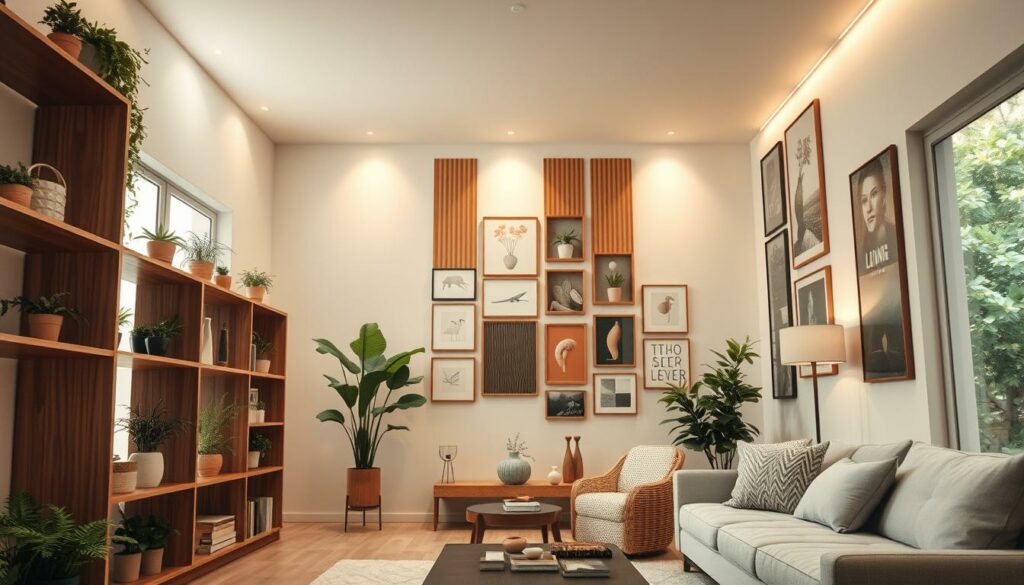
Pick shelving that matches your needs and style. Floor-to-ceiling units increase storage without using more floor space. Open shelves show off books and art. Closed cabinets hide messes, making spaces look neat.
Shelving Solutions for Small Areas
Floating shelves create a sense of height. They are perfect above desks and vanities. Wall-mounted pegboards adjust for storage needs in kitchens and craft areas. Ladder shelves are light and add a vertical touch without taking up much room.
Use bins and baskets on high shelves for items you don’t often use. Keep a small step stool nearby. This way, you can easily reach things. These storage ideas help keep your space organized and clutter-free.
Tall Furniture vs. Wide Furniture
Tall, slim furniture saves floor space and makes rooms feel more spacious. A narrow bookcase or armoire looks less bulky than a wide dresser. Use light colors and keep walls uncluttered to maintain an open feel.
Always secure tall furniture to walls to prevent tipping. In closets, install high shelves and rods for extra storage. Modular systems offer custom storage for clothes, shoes, and accessories.
| Option | Best For | Pros | Cons |
|---|---|---|---|
| Floor-to-ceiling shelving | Living rooms, home offices | Maximum storage, uses vertical space, neat look | May need professional installation |
| Floating shelves | Bathrooms, kitchens, small walls | Light visual impact, easy to install, display friendly | Limited weight capacity |
| Ladder shelves | Entryways, small living areas | Portable, stylish, no floor drilling | Less storage depth |
| Modular closet systems | Bedrooms, walk-ins | Customizable, increases vertical capacity, integrates drawers | Cost varies by configuration |
| Tall armoires/bookcases | Bedrooms, studies | Stores bulky items, draws eye upward | Can feel heavy if dark or crowded |
Select the Right Window Treatments
Choosing the right window treatments can freshen up a room and make it seem bigger. They enhance natural light and give the room depth. This helps small spaces look well-organized. Aim to lift the eye with your choice of fabric, how you hang them, and where.
Light and Breezy Fabrics
Go for sheer curtains, linen blends, or lightweight cotton for privacy but let in daylight. These materials make the space feel open and larger.
Mount curtains well above the window, about 6–12 inches, or near the ceiling. Make the rod extend past the trim. This trick creates the illusion of bigger windows and higher ceilings.
Opt for single-panel curtains that can be pulled to one side. This keeps the window clear when open, letting in more light. It also aids in making small areas look tidy.
Avoiding Heavy Drapes
Heavy drapes and fancy valances make a room feel cramped and block light. Only use these in rooms where you need to reduce noise or block out light, like in bedrooms.
If you need blackout or insulation, pair a light sheer underneath a heavier curtain. This combo allows for light during the day and darkness when needed.
Consider cordless blinds or cellular shades for a slim, insulated option that won’t overwhelm a space. For closets, use slim shades to match the style of the room and keep things uniform.
| Treatment | Visual Effect | Best Use |
|---|---|---|
| Sheer Curtains | Brightens space, airy feel | Living rooms, kitchens, small bedrooms |
| Linen Blend Panels | Soft texture, subtle height illusion | Dining areas, open-plan spaces |
| Lightweight Cotton | Casual, clean lines | Nurseries, casual bedrooms |
| Cordless Blinds | Uncluttered look, safe for kids | Small spaces, rental units |
| Cellular Shades | Insulates without bulk | Rooms needing temperature control |
| Heavy Drapes | Blocks light, adds weight | Bedrooms needing blackout or soundproofing |
Keep Your Floors Clear
Open floor space makes the eye move smoothly. By cutting down on rugs, cords, and clutter, you create a seamless look. This makes the room appear larger. Pick furniture that shows some leg and elevate storage bins to show more floor and improve the flow.
Advantages of Minimalistic Flooring
Uninterrupted floors give rooms a calm feel. Minimalistic flooring reduces visual clutter, making spaces feel larger and more serene. It also highlights storage and decor without competing with the floor.
Clear floors reflect light, helping rooms look bigger. By removing items like loose cables, you improve safety and make cleaning easier. Use storage benches and shoe racks to keep floors tidy.
Best Flooring Options for Small Spaces
Medium-tone woods or similar options add warmth and continuity. Large tiles with few grout lines make the area look wider and reduce a busy appearance.
Stay away from patterns that chop up the space. Choose materials that are durable, easy to clean, and slip-resistant. Brands like Armstrong, Mohawk, and Shaw have ideal options for small areas.
For a smooth look, match flooring in closets or use similar thresholds. This trick enhances closet organization and overall room flow.
| Flooring Type | Visual Effect | Practical Notes |
|---|---|---|
| Engineered hardwood | Warm, continuous look that helps make room look bigger | Durable, refinishing options; moderate cost |
| Luxury vinyl plank | Wood-like continuity with high moisture resistance | Easy to clean, budget-friendly, good for high traffic |
| Large-format porcelain tile | Smooth, expansive surface that minimizes visual breaks | Hardwearing, low grout lines; choose textured finish for slip resistance |
| Small-pattern tile | Can fragment the floor plane and shrink perception | Better for accents or small areas, not full rooms |
| Area rugs (minimal use) | Adds warmth without breaking continuity when large and neutral | Keep rugs large and low-contrast; avoid many small rugs |
Add Natural Light with Smart Design
Bringing daylight into a room changes its feel. Natural light design makes a space feel airy and open. Small adjustments can make a room look bigger and improve organization in small spaces.
Skylights bring direct daylight from above, making interiors brighter. They add a sense of vertical openness. You can use them in homes, bathrooms, and hallways to brighten dark corners. Venting skylights cool your home naturally. Fixed models offer light without affecting indoor temperature.
For skylights, go with trusted brands like Velux or Fakro. They offer variety and professional set-up. Ensure proper insulation to control heat. Use glazing or blinds for light control in bedrooms or rooms with afternoon sun.
Transom windows pass light to other rooms, keeping your privacy. Placed above doors, they free up wall space for furniture. Glass transoms or clerestory designs keep adjacent spaces connected and bright.
Consider adding transoms during a remodel, or try removable glass partitions if you rent. This lets you experiment before making permanent changes. It’s a flexible way to enhance small space organization.
Combine skylights and transom windows with light walls and mirrors to look more spacious. This avoids major renovations. Choose furniture that complements the light direction, making your space cohesive and practical.
| Feature | Best Use | Energy & Comfort Notes | Impact on Small Space Organization |
|---|---|---|---|
| Venting Skylight | Bathrooms, kitchens, warm climates | Provides passive cooling; needs proper sealing | Reduces need for bulky ventilation units; frees wall space |
| Fixed Skylight | Hallways, single-story rooms, attics | Maximizes daylight; minimal maintenance | Brightens central zones, allowing compact storage layouts |
| Glass Transom | Above doors, between rooms | Transfers light while preserving privacy | Keeps walls clear for shelving and tall storage |
| Interior Clerestory | Room dividers, lofts, offices | Maintains airflow and sightlines | Creates connected zones that aid small space organization |
Declutter Your Environment
Starting with a clear intent is key to a tidy room. Decluttering cuts down visual clutter and brings calm to daily living. Small actions can greatly improve your mood and make spaces feel bigger.
The Importance of Minimalism
Minimalism is about keeping only what you use or love. It lessens stress, makes cleaning easier, and frees up your view.
Sort items with the four-box method: keep, donate, sell, discard. This helps avoid getting overwhelmed by choices. Make it a habit to clear out closets every season so unused clothes get rehomed.
Follow the one-in-one-out rule when buying new things. This keeps clutter from coming back and helps keep small spaces organized. For closets, take out clothes you won’t wear soon, give away what you don’t wear, and arrange the rest by how often you use them.
Smart Storage Solutions
Choose storage that fits your daily life. Use bins under the bed, hanging organizers, racks, baskets, and clear bins for easy access.
For a tailored fit, consider The Container Store’s Elfa, IKEA PAX, or California Closets. Adjustable shelves, drawers, and labeled bins can keep clutter off surfaces.
To keep clutter down, tidy up for 15 minutes monthly, label storage, and stash seldom-used items out of the way. These tips will help you keep your space neat and enjoyable.
| Problem | Easy Fix | Recommended Product |
|---|---|---|
| Overflowing closet | Seasonal purge and categorize by use | Hanging closet organizer |
| Cluttered floor space | Use under-bed storage and clear bins | Stackable clear bins |
| Items hard to find | Label bins and add pull-out drawers | Elfa adjustable shelving |
| Small accessories and linens | Use over-the-door racks and under-shelf baskets | Over-the-door rack |
| Need long-term custom fit | Install modular systems with adjustable options | IKEA PAX or California Closets |
Use Decorative Elements Sparingly
When you aim to enlarge a room’s appearance, remember that less is more. Choose a few pieces that complement your color scheme and fit the room’s size. This focus prevents the room from feeling cluttered.
Instead of hanging many small pictures, opt for larger artworks at eye level. A single large print or mirror simplifies the space. Stick to streamlined frames and simple matting for a unified look.
Choose decor that’s both beautiful and useful. Stylish baskets, neat storage boxes, and ornamental mirrors add appeal and function. These items combine decoration with organization for a tidy space.
How to Choose the Right Decor
Begin by reducing clutter. Keep tabletop decorations to three to five items, allowing space around them. Change these items with the seasons for a fresh look without filling every space.
Select items that fit the room’s proportions. In long rooms, use tall decorations. In wide rooms, a large rug can pull the space together. This keeps the focus without dispersing it.
Opt for decor that has a purpose. Use see-through storage and chic bins in line with closet organization. This strategy balances beauty with functionality.
Creating Focal Points Without Clutter
Create a single eye-catching spot, and keep the rest simple. A gallery wall, bold rug, or unique light fixture draws attention without needing other pieces nearby.
Make use of empty space. Keeping some areas bare around your key item makes it stand out. This trick also makes a room appear larger.
In closets, arrange an open shelf with a select few items or accessories. Using clear storage helps keep everything visible and orderly. These closet designs are purposeful and stylish.
| Styling Goal | Recommended Pieces | Practical Organization Tips |
|---|---|---|
| Create a Single Focal Point | Large framed art, statement rug, pendant light | Limit surrounding items to 1–2, leave negative space |
| Combine Beauty and Function | Woven baskets, decorative boxes, ornamental mirror | Use baskets for linens; label boxes for easy access |
| Elevate Closet Displays | Clear-front bins, a styled shelf with 3–5 items | Rotate seasonal pieces; group by color for cohesion |
| Maintain a Spacious Feel | One large statement item per room | Edit surfaces monthly and follow organization tips |
Create a Cohesive Color Scheme
To make your home feel bigger, begin with a color scheme that ties everything together. Start with a main neutral color like a warm white or soft gray for walls and furniture. Then pick two accent colors to add pops of interest sparingly. This helps your eye move easily through the space, making it seem more open.
Try to keep finishes matching, too. Use the same metals and wood tones for things like doorknobs and furniture. Brands like Sherwin-Williams and Benjamin Moore have sample palettes to help you match colors easily. Create a mood board, try out paint samples in natural light, and choose a main color for big areas before you add your accent colors.
Accent colors can add depth without making a room feel too busy. Small touches like pillows, a colorful throw, or painted trim can add contrast and depth. Adding vertical lines with things like striped wallpaper or colored curtains can make ceilings look taller. And using darker tones near the floor can make the room feel well-grounded.
When you’re organizing a small space or updating a closet, use accents to your advantage. Things like colored bins, a fun rug, or matching hangers can make storage seem deliberate. Stick to a few colors, repeat them in nearby rooms, and mix in different textures. These tips can make your rooms feel both connected and more spacious.