

Over 65% of Americans dodge deep-cleaning their bathroom, finding it too daunting. Smart steps can make the process faster.
This guide shows effective and easy bathroom cleaning hacks. Learn to use common items like white vinegar and baking soda for cleaning. You’ll also discover handy tools like microfiber cloths and squeegees.
It’s perfect for busy households, renters, and homeowners who need quick results. Get straightforward steps, DIY tips, and advice on safety measures. This includes wearing gloves and ventilating the area.
The layout is designed to save you time. It covers everything from supplies to daily tips and deep-clean checklists. By following these strategies, keeping your bathroom clean becomes easier.
The Importance of Keeping Your Bathroom Clean
A clean bathroom protects your health and enhances daily routines. Effective cleaning techniques and quick solutions are key. They help fight germs and keep your bath space fresh.
Health Benefits of a Clean Bathroom
Cleaning often kills bacteria and viruses on frequently touched surfaces. This lowers the chance of getting sick from germs.
Stopping soap scum and biofilms keeps bad microbes away. Clean grout and drains weekly to prevent buildup.
Psychological Impact of Cleanliness
A neat bathroom makes you feel less stressed and happier. It feels safe and orderly, calming your mind at night or after work.
If your bathroom is inviting, you’ll enjoy taking care of yourself more. Tidying up and adding nice smells can improve relaxation and sleep.
Preventing Pests and Mold
Damp areas and leftover residues draw pests like cockroaches. Dry surfaces and seal toiletries to avoid feeding these bugs.
Mold can trigger asthma and allergies. Use fans or dehumidifiers and repair leaks to stop mold. To keep air fresh, ventilate after showering and put moisture absorbers in cabinets.
| Issue | Simple Fix | Suggested Tool |
|---|---|---|
| Germs on handles and faucets | Daily wipe with disinfectant | Antibacterial spray or disinfectant wipe |
| Soap scum and biofilm | Weekly scrub with a non-abrasive cleaner | Bristle brush and vinegar-based cleaner |
| High humidity and mold | Run exhaust fan during and after showers | Exhaust fan or small dehumidifier |
| Pests in cabinets | Store items in sealed bins and use moisture absorbers | Silica gel packs or moisture-absorbing boxes |
| Stale odors | Air out room and use a mild deodorizer | Baking soda sachet or natural spray |
Essential Cleaning Supplies for Your Bathroom
Having the right cleaning supplies makes chores easier and keeps your bathroom clean. Keep a small kit ready for quick cleanups. Follow these easy steps to create a useful cleaning setup you’ll use often.
Must-Have Tools for Effective Cleaning
- Microfiber cloths — Great for mirrors, countertops, and chrome. They leave surfaces streak-free without strong chemicals.
- Scrub brushes — You should have a toilet brush and a narrow grout brush for tough spots and tight spaces.
- Squeegee — Use this on shower glass and tiles after use. It helps prevent water spots and reduces soap scum.
- Mop or steam mop — A steam mop is best for tile floors to remove dirt easily. A regular mop works well for other quick cleanups.
- Bucket — It’s useful for mixing cleaning solutions and rinsing your tools during deep cleans.
- Rubber gloves — They protect your hands when using strong cleaners or scrubbing a lot.
- Disposable wipes — Keep them handy for fast cleanups of spills and splatters.
- Pumice stone — It’s safe for porcelain and can remove tough stains without scratching.
- Handheld vacuum — Perfect for cleaning up hair on floors and in corners before you mop.
Best Eco-Friendly Cleaning Products
Go for green cleaners to lower fumes and keep your plumbing safe. Try Dr. Bronner’s Castile Soap as a multi-use cleaner. Seventh Generation bathroom cleaner does a great job on soap scum and leaves no harsh residue.
Method Daily Shower spray uses plant-based ingredients to prevent buildup. For homemade solutions, mix white vinegar and baking soda. They work well on drains, tubs, and grout. Hydrogen peroxide can also brighten and disinfect without the bleach smell.
But don’t use vinegar on natural stone like marble. Choose pH-neutral cleaners to avoid damage.
How to Create a Cleaning Caddy
- Choose a strong tote or caddy with sections to keep things neat.
- Add a multi-surface cleaner and either a glass cleaner or vinegar for shiny surfaces.
- Put in a disinfectant, like bleach or an EPA-approved spray, especially for the toilet.
- Include scrub brushes, a sponge, microfiber cloths, gloves, and extra trash bags for easy changing.
- Add a pumice stone and a small spray bottle of diluted hydrogen peroxide for spot cleaning.
- Store your caddy under the sink or in a closet. It makes it handy for daily and weekly cleaning.
Follow these bathroom cleaning tips for quicker and more effective cleaning. Try DIY cleaning hacks with safe, eco-friendly products to find what works best for you.
Daily Bathroom Cleaning Hacks
Make your bathroom feel fresh daily with easy actions. These quick cleaning tips focus on small, daily habits. This way, you’ll avoid tough buildup and make thorough cleaning easier.
Focus on the items you use often. Keep a multipurpose spray near the sink for quick wipes. A microfiber cloth can clean the vanity each time it’s used. Wash soap dishes and trays to prevent buildup. Taking out the trash every day stops bad smells and mess.
Quick Ways to Keep Surfaces Tidy
Have a spray and cloth ready for immediate spills. Cleaning the counter and sink each morning prevents residue from sticking. After showering, quickly clean the shower door. These steps are great shortcuts for a clean bathroom, especially when you’re busy.
The Power of a Squeegee after Showering
Use a squeegee on glass and tile after showering to prevent water spots and soap scum. Start from the top and go down, making sure strokes overlap for a clean finish. Dry the squeegee with a cloth to avoid leaving streaks.
Find affordable squeegees at Home Depot and Amazon. Having one in your shower encourages use. This easy habit is among the top ways to keep your bathroom clean.
5-Minute Routines for Busy Schedules
If you’re in a rush, try a quick three-step routine. Spray the shower or tub first and let it sit. Next, clean the sink, counter, and mirror. Finally, brush the toilet and swap out the towels.
Doing this daily prevents long cleaning days. These tips and tricks focus on doing a little each day. Just a few minutes every day keeps your bathroom clean and welcoming.
Effective Ways to Tackle Soap Scum
Soap scum piles up quickly on glass, tile, and porcelain. But you can tackle it using either store-bought cleaners or simple items from your kitchen. These methods are not only safe but also keep your bathroom shining without too much effort.
Choose commercial products for quick results. Always read the labels and wear gloves for safety. Make sure the room is well-ventilated and remember never to mix acid-based cleaners with bleach. These tips are also great when you’re looking for softer cleaning solutions.
Best Products for Soap Scum Removal
For mineral buildup, CLR Bath & Kitchen cleaner is effective. Lime-A-Way is good for tackling scale. And Bar Keepers Friend is excellent on porcelain and stainless steel. Kaboom Foam-Tastic is great for sticking to walls, making scrubbing easier. Acid-based cleansers dissolve scum fast, while surfactant cleaners lift it off for easy removal.
Always wear gloves and ventilate the area. Test a small area first if the surface might be sensitive. Avoid mixing different chemical cleaners. If you prefer gentle methods, mix these products with smart cleaning hacks. This could be using short wait times or a soft brush to avoid damage.
DIY Solutions Using Common Household Items
A baking soda paste is a go-to option. Just mix baking soda with water, apply it, and scrub off with a damp sponge. For glasses and tiles, a mix of equal parts white vinegar and water works wonders. Spray it on and let it sit before wiping it clean.
For tougher spots, sprinkle on baking soda, then spray with vinegar and watch the fizzing action. On porcelain, gently use a wet pumice stone for difficult rings. Don’t use vinegar on sensitive stones like granite or marble though. And test any homemade solution in a hidden spot first.
Tips for Preventing Soap Scum Buildup
Switching to liquid soaps or those from dispensers can reduce soap scum. Wiping down the walls and tub with a squeegee or cloth after each use helps too. Using a daily shower cleaner will prevent scum from drying out and sticking, making cleaning easier later.
If you have hard water, consider getting a shower filter or a whole-home water softener. Pairing these with effective cleaning habits can greatly cut down on soap scum buildup in the future.
| Problem | Quick Fix | Best Product Type | DIY Option |
|---|---|---|---|
| Light soap film on glass | Vinegar spray, wipe with microfiber | Surfactant cleaner | Equal parts white vinegar and water |
| Stubborn mineral deposits | Apply CLR or Lime-A-Way, rinse well | Acid-based cleaner | Baking soda paste plus vinegar soak |
| Porcelain rings | Bar Keepers Friend, gentle scrub | Nonabrasive powder cleaner | Wet pumice stone, use gently |
| Frequent quick buildup | Daily shower spray and squeegee | Light daily spray | Water-and-vinegar mist after shower |
Tricks for Cleaning Grout and Tiles
Keeping tile and grout shining requires patience and the correct methods. Use smart bathroom cleaning tricks and safe techniques to remove stains. These tips work well for cleaning a small area or an entire floor.
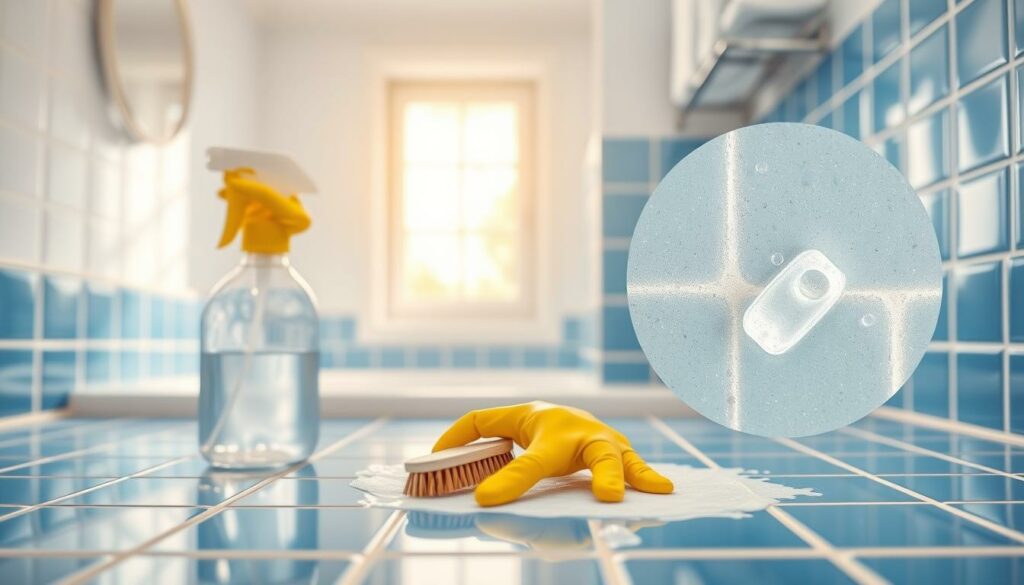
How to Make Your Own Grout Cleaner
Create a paste using baking soda and hydrogen peroxide in a 3:1 ratio. Apply this paste to the grout and wait for 10–15 minutes. Then scrub the grout with a brush and rinse it off carefully.
For tiles that aren’t made of stone, mix vinegar and baking soda: dampen the grout, add baking soda, spray with vinegar, wait for the fizz, then scrub and rinse. Always test hydrogen peroxide on colored grout first.
Techniques for Deep-Cleaning Tiles
Start by rinsing tiles to loosen dirt. Spread a cleaner evenly and let it sit for a bit. Then, clean grout lines well with a stiff brush or an electric scrubber.
Rinse tiles thoroughly after to remove any cleaner, and dry surfaces to prevent mildew. For moldy grout, a diluted bleach solution (1:10 bleach to water) or oxygen bleach can be used. Ensure the area is well-ventilated when using strong cleaners.
Regular Maintenance to Keep Grout White
Seal your grout every year with a penetrating sealer to keep out stains and moisture. Dry off excess water after showers and tackle any discoloration as soon as it appears.
For small fixes, use a grout pen, and for yearly deep cleaning, think about using a steam cleaner. These steps help maintain clean grout and reduce the need for frequent thorough cleanings.
| Task | DIY Solution | When to Use | Notes |
|---|---|---|---|
| Light maintenance | Vinegar spray and microfiber wipe | Weekly | Safe for glazed ceramic and porcelain tiles |
| Stubborn grout stains | Baking soda + hydrogen peroxide paste (3:1) | Spot treatment | Test on colored grout; rinse thoroughly |
| Mold or heavy mildew | Bleach (1:10) or oxygen bleach soak | Occasional deep clean | Use ventilation and gloves; oxygen bleach is gentler |
| Preventive care | Annual grout sealer + steam clean | Yearly | Reduces staining and extends grout life |
| Quick cosmetic fix | Grout pen | As needed | Good for small discolored areas; follow label |
Freshening Up Your Toilet
Keeping your toilet clean raises bathroom hygiene and comfort. You can do this with daily habits and deep-cleaning. Here are some easy recipes, maintenance tips, and disposal rules that work well together.
Natural Toilet Bowl Cleaners You Can Make
To clean safely and effectively, start by pouring 1 cup baking soda into the bowl. Then add 1–2 cups white vinegar. Let the mix fizz for 10–15 minutes, scrub with a brush, and flush. For tough stains, make a paste with borax and lemon juice, apply, wait 15–20 minutes, then scrub and rinse. If you like ready-made cleaners, try Seventh Generation or Better Life. They’re plant-based and great additions to your cleaning routine.
Best Practices for Toilet Maintenance
Clean deeply with a disinfectant weekly. Briefly brush after each use to prevent buildup. Closing the lid when flushing reduces germ spread. Hearing running water often means a leak; a worn flapper is a common culprit. Replace it to save water and prevent waste.
Have an extra brush or replacement heads to change out when needed. These small changes help keep your toilet clean and your plumbing in good shape.
Disposing of Waste Properly
Don’t flush baby wipes, even if they say flushable, or feminine products, cotton balls, or too much paper. These items can block pipes. Use a lidded waste bin in the bathroom. Empty it regularly to avoid bad smells.
To dispose of old cleaners with hazardous chemicals, follow local municipal guidelines. Check your county’s waste page or the EPA for disposal instructions. This ensures you dispose of waste safely without harming sewers or the environment.
Organizing Your Bathroom for Easy Cleaning
Keeping your bathroom organized cuts down on cleaning time. Smart storage solutions make the space easier to clean and keep tidy with little work. These tips focus on making everyday maintenance almost effortless.
Firstly, add vertical storage to free up more space. Over-the-toilet shelves are perfect for small bathrooms. They give you space for towels and bins. Wall-mounted baskets and tension rods under the sink keep things organized and easy to find.
Opt for moisture-resistant containers to avoid mildew. Using clear, labeled bins makes it easy to see what you have. This saves time when looking for items and keeps things organized.
Storage Solutions to Simplify Tidying Up
Putting similar items together makes cleaning quicker. A caddy or tray for daily use items keeps backups organized. Drawer organizers prevent small items from creating a mess.
Hang robes on hooks and throw laundry in baskets. A slim rolling cart can easily be moved out of the way. These tricks help you tidy up in moments and reduce the need for deep cleaning.
Decluttering Tips for Bathroom Essentials
Get rid of old cosmetics and medications every month. Keep less used items on a high shelf or in another closet. This keeps countertops clean. Store seasonal items in a labeled box.
Keep daily items in a specific tray or drawer. This helps your morning routine and keeps dust away. These tips make daily cleaning faster and easier.
How to Keep Your Countertops Clear
Only keep essentials like a toothbrush and soap dispenser on your vanity. Use wall-mounted holders and recessed cabinets to free up space. This reduces clutter and makes cleaning easier.
Use shallow trays to organize small items. Less clutter means easier cleaning and less dust buildup. Follow these tips for a clutter-free, easy-to-clean bathroom.
| Problem | Smart Storage Fix | Recommended Brands |
|---|---|---|
| Cluttered vanity | Wall-mounted holders, small trays for daily items | IKEA, The Container Store |
| Limited floor space | Over-the-toilet shelving, slim rolling cart | Amazon Basics, ClosetMaid |
| Scattered cleaning supplies | Tension rod under sink to hang sprays, labeled clear bins | IKEA, The Container Store, Amazon Basics |
| Moisture and mildew risk | Moisture-resistant containers and elevated shelving | The Container Store, IKEA |
| Too many small items | Drawer organizers, monthly purge routine | The Container Store, Amazon Basics |
Shower Curtain and Bath Mat Care
Keep your shower curtain and bath mat clean to avoid mold. Simple cleaning tips can make liners and rugs last longer. These tricks are quick and easy solutions for a cleaner bathroom today.
How to Machine Wash Shower Curtains
Most fabric and some vinyl liners can be machine washed. Mix in a cup of white vinegar and mild detergent. Include a couple of bath towels for extra scrubbing. Choose warm water and a gentle cycle.
Always check the care label first. Dry the curtain by hanging it up. Use a mildew-resistant liner for bathrooms with poor airflow.
Tips for Keeping Bath Mats Fresh
Regularly shake out bath mats to get rid of hair and debris. Machine wash fabric mats as the label directs. Use hot water for those with mildew. Make sure they’re fully dry before putting them back.
Use baking soda to fight odors between washes. Wash rubber-backed mats by hand to keep the backing safe. Rinse thoroughly and hang to dry.
When to Replace Your Shower Curtain or Mat
Change out vinyl liners every 6–12 months to combat mildew. Replace bath mats if the backing starts to peel, mold shows, or smells linger. Changing them regularly helps prevent mold and keeps the bathroom healthy.
| Item | Care Frequency | Cleaning Method | Replace When |
|---|---|---|---|
| Fabric Shower Curtain | Every 1–3 months | Machine wash on gentle with mild detergent; line-dry | Stains or persistent mildew |
| Vinyl Shower Liner | Monthly wipe; machine wash if label allows | Warm gentle wash with vinegar and towels; air-dry | Mildew return within weeks |
| Fabric Bath Mat | Weekly shake; wash every 1–2 weeks | Machine wash per label; hot water for mildew-prone mats; air-dry | Persistent odor or mold |
| Rubber-Backed Mat | Weekly shake; wash monthly | Hand-wash with mild soap; hang to dry | Backing peels or mold in backing |
Dealing with Hard Water Stains
Hard water can make your bathroom look dull. You’ll see white deposits on faucets and cloudy glass. Your laundry might feel stiff too. This is due to water hardness, measured in grains per gallon or ppm. You can use a home testing kit or check your local water report to find out your water’s hardness level.
Identifying common signs around the house
Look for crusty rings around faucets and drains. Shower glass that stays foggy often means there’s mineral buildup. If water from your showerhead trickles, it might be clogged with scale. Dingy towels post-wash suggest minerals are messing with your laundry as well.
Practical removal methods that work
For light buildup, try soaking parts in white vinegar. Wrap a plastic bag full of vinegar around the showerhead for an hour. Then, give it a good scrub with an old toothbrush. For thicker scale, CLR or Lime-A-Way are good choices. Just follow what the label says.
To clean glass, use a soft cloth with a paste of baking soda and water. Don’t use vinegar on marble or limestone. Instead, use a cleaner approved for stone to avoid damage.
Prevention tips for long-term care
Consider a whole-house water softener to reduce mineral buildup. If you’re just dealing with bathroom issues, a point-of-use softener or shower filter can help. Remember, softening systems need salt and must be maintained.
Getting in the habit of drying fixtures after use helps. Also, try vinegar soaks for metal parts maintenance. These steps save time and keep your fixtures looking new.
| Problem | Quick Fix | Long-Term Solution |
|---|---|---|
| Faucet mineral rings | Vinegar soak and scrub | Wipe dry after use; install softener |
| Cloudy shower glass | Baking soda paste or glass polish | Use a water-repellent treatment; regular squeegee |
| Clogged showerhead | Vinegar bag soak, brush nozzles | Point-of-use softener or filter |
| Scale on tiles and grout | Vinegar solution for ceramic; grout cleaner | Routine maintenance with mild descaler |
| Damaged natural stone | Manufacturer-approved cleaner | Avoid acids; use soft water where possible |
Keep your bathroom free from mineral buildup with the right cleaning techniques. Mix removal methods with preventive maintenance for better results. This way, cleaning bathrooms with hard water becomes easier and more effective.
Seasonal Bathroom Deep Cleaning Checklist
Start your seasonal deep clean by gathering supplies and wearing protective gear. First, clear off countertops and read all product labels. Next, make sure the room has good air flow by opening windows or using the fan. Organize your cleaning by sections like the shower, fixtures, and cabinets. Plan to spend 1–3 hours on each bathroom. Remember, preparing makes cleaning easier, safer, and more effective.
Preparing for Seasonal Deep Cleans
Have a solid plan in place. Collect microfiber cloths, a grout brush, descaler, and safe cleaning agents like mild bleach or alternatives. Also, grab your gloves. Wash any rugs and liners, clear out old products from cabinets, and make a note of anything that needs fixing. Set reminders on your phone to carve out time for cleaning, and keep your checklist within reach to stay on track.
What to Focus On Each Season
In spring, focus on cleaning tile and grout, washing shower curtains, and replacing damaged caulk. During summer, pay attention to exhaust covers, fans, and check showerheads for mineral buildup. In fall, prepare for rainy days by resealing grout and checking for leaks. Winter calls for disinfecting frequently touched areas and taking steps to prevent condensation and mold, like insulating pipes or sealing drafts. Adjusting your cleaning tasks with the seasons keeps your bathroom in top shape.
Creating Your Own Deep Cleaning Schedule
Create a basic plan. Every month, clean cabinet interiors and mirrors, and disinfect the toilet. Quarterly, focus on washing the shower liner, deep-cleaning grout, and descaling fixtures. Every six months, seal grout, scrub tiles, and replace any liners or mats. Once a year, check the plumbing and do any necessary repainting or caulking. Tailor this schedule based on your home’s needs and local water conditions. Use reminders, a printed checklist, or an app to keep up with your plan and ensure your bathroom stays clean and fresh.