
Nearly 80% of people feel their home is too cramped due to clutter. Yet, many don’t try simple solutions.
We offer practical tips and tricks for organizing your home. You’ll learn how to declutter and save time. These solutions are good for any size home.
The main goals include cutting down clutter and establishing easy routines. We also show you how to use both simple and high-tech tools. These help make daily life simpler.
Studies and common sense agree: this approach leads to less stress. Also, you’ll enjoy quicker clean-ups, more room, smoother mornings, and a better home value.
Next, we’ll guide you through creating a decluttering plan and investing in smart storage. You’ll also learn about daily cleaning habits. Plus, how to organize closets and kitchens, deal with paperwork, and get your family involved. Finally, we’ll cover how to keep up with these systems.
Keep reading to choose the best organizing methods for your budget and space. Then, get ready to see changes quickly.
Create a Decluttering Plan
Begin with a simple strategy that lets you see what you own, identify what’s important, and ditch things you don’t need. This approach makes tidying up your home easier and helps keep things efficient.
Assess What You Have
Check each room. Decide what to keep, give away, sell, recycle, or toss. Use boxes with labels, a timer, and take pictures with your phone to note areas that need work and to follow your progress.
Places like Goodwill, Salvation Army, Habitat for Humanity ReStore, and local charities in the U.S. take many donations. For selling, platforms like Facebook Marketplace, eBay, or OfferUp are good for fast sales.
Set Realistic Goals
Pick goals you can hit, like cleaning one drawer daily or one room every weekend. Achieving small goals keeps you going and helps with keeping your home organized.
Follow the 20/20 rule: let go of anything not used in 20 months and costing less than $20 to replace. This keeps you from feeling overwhelmed and keeps the momentum.
Schedule Regular Decluttering Sessions
Plan short decluttering times of 15–30 minutes weekly, and set aside time for a thorough clean every few months. Use calendars like Google Calendar or Apple Calendar with alerts to make this a habit.
Doing this with the change of seasons works well. Change out clothes, look over holiday decorations, and clear clutter from major life events. A Pomodoro timer can help you stay focused, and keeping a donation box in sight reminds you to donate when it’s full.
Invest in Storage Solutions
Smart storage solutions can transform messy rooms into functional areas. Aim for quality and pick items that match how you live. Sketch a basic layout and measure entrances before buying. This ensures your new pieces fit perfectly in your home.
Choose the Right Furniture
Look for furniture that includes storage, like ottomans that open up. Think about storage beds, such as the IKEA MALM series, and tables with shelves below. Choose a media unit that hides electronics, reducing mess. Pick solid wood for durability, laminate to save money, and metal for an industrial look. Measure your space carefully. Then, select items that help organize it well.
Utilize Vertical Space
If you’re short on floor space, think vertical. Set up wall shelves and floating shelves to show off decor without taking up floor space. Try tall bookshelves, like IKEA BILLY, and pegboards for organizing various items. Use organizers over doors for shoes and cleaning supplies. Make sure to secure tall furniture properly. This ensures both safety and better space use.
Opt for Multi-functional Items
Choose furniture that serves more than one purpose. Consider Murphy beds and sofa beds that make room for everyday activities. Nesting tables and collapsible dining tables are great for saving space. Use stackable bins and modular setups like The Container Store’s Elfa or IKEA KALLAX for flexible storage. Mix expensive items with affordable ones for a balanced look that meets your budget.
Implement a Daily Cleaning Routine
Start organizing at home with quick, daily habits to prevent clutter. A daily cleaning ritual saves time later and helps your organization methods work better. Choose cleaning routines that are easy and match your lifestyle to maintain the organization systems you’ve created.
Set a Specific Time
Choose a time that works for you. Morning people can set aside 10–20 minutes after waking up. Night owls might prefer a 15–30 minute cleaning session in the evening. Connect cleaning tasks with habits you already have, like tidying up the kitchen after meals or a quick pickup before bedtime. Having a set schedule makes your cleaning routine more effective.
Break It Down by Room
Focus on one room at a time to make cleaning easier. In the kitchen, load the dishwasher and clean the counters. In the living room, fix the pillows and put things back in place. In the bedroom, straighten the bed and sort out laundry. And in the bathroom, clean the sink and mirror and change the towels when needed.
Have cleaning tools ready: a microfiber cloth, a good spray like Method or Mrs. Meyers, and a small vacuum such as a Dyson cordless or Shark handheld. Having the right tools makes cleaning faster and more efficient.
Use a Cleaning Checklist
Sort your cleaning tasks into daily, weekly, and monthly lists to manage chores better. Try using apps like Todoist or Google Keep, or hang a checklist on the fridge. These lists help you stick to your daily cleaning routine and keep your home organized.
| Frequency | Sample Tasks | Suggested Tools |
|---|---|---|
| Daily | Wash dishes, wipe counters, quick pickup, make bed | Microfiber cloth, multipurpose spray, dishwasher |
| Weekly | Vacuum, mop, change bedding, deep-clean bathroom | Dyson or Shark vacuum, mop, cleaning solutions by Mrs. Meyers |
| Monthly | Dust vents, clean behind appliances, declutter drawers | Extendable duster, small toolbox, donation box |
Save time by using strategies like time-blocking and sharing chores with family. Opt for multipurpose cleaners to reduce the number of products you need. Consider using robots like Roomba or iRobot Braava for everyday cleaning. These strategies make organizing your home easier and keep your cleaning routine strong.
Designate Spaces for Everything
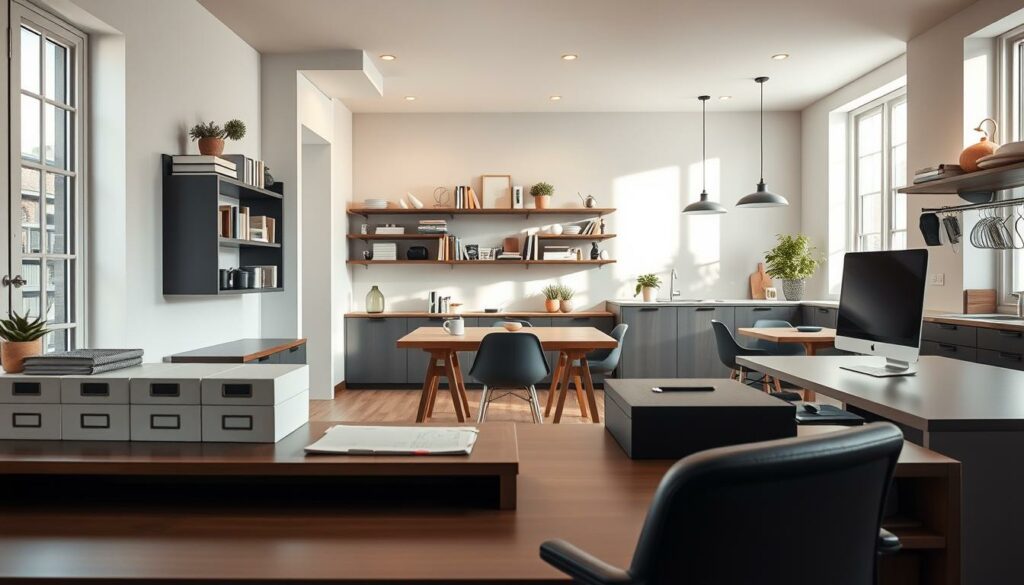
Assigning each item a specific spot reduces stress and keeps rooms tidy. Begin by deciding where each thing should go. This turns messy areas into organized spaces, one object at a time.
Follow the “One In, One Out” Rule
Get something new? Say goodbye to something old. This easy rule helps avoid clutter and maintains organization. Apply it to your wardrobe, kitchen gadgets, and home decorations.
Label Storage Bins
Using clear bins? See what’s inside at a glance. Label them with tags like “Cords & Chargers,” “Pet Supplies,” or “Seasonal Decorations” for quick access. A Brother P-touch label maker or chalkboard labels work well, especially for changing contents.
Keep often-used items in easy-to-reach places. Store seldom-used things higher up or further back. This strategy balances easy access with smart storage.
Create Zones in Each Room
Define specific areas: an entryway for coats and shoes, a kitchen for cooking, a living room with a play area, and a bedroom for rest. A home office should have spots for filing, current projects, and supplies.
Arrange zones based on how you move around your home. Use trays for small items in busy spots and put things back in their place often. These steps keep your home organized every day.
Maintain a simple upkeep schedule: keep daily items close, tidy up weekly, and fine-tune as your lifestyle changes. Consistent, small efforts help maintain the neatness you’ve achieved.
Maximize Your Closets
Closets can change how you start your day. An orderly closet saves time and creates space in other areas. Make small changes for smoother mornings and smarter storage at home.
Begin with easy storage solutions that simplify your life. A neat system makes clothes easy to see and pick. These tips prevent clutter and help you keep what you really need.
Use hanging organizers
Fabric shelves are great for sweaters because they stay tidy folded. IKEA SKUBB or AmazonBasics shelves are easy to put up. Shoe organizers save floor space. Hanging organizers for jewelry or accessories keep small items organized.
Invest in slim hangers
Slim hangers save closet space and prevent clothes from slipping. AmazonBasics velvet hangers are perfect for this. Use wooden hangers from H&M for heavy coats. The same hangers make your closet look neat.
Store seasonal items
Switch out clothes with the seasons using vacuum bags from SpaceSaver or labeled boxes. Keep seldom-used items up high. Folding sweaters prevents them from stretching.
To keep clothes fresh, use cedar blocks or lavender sachets. Label bins by contents and year for easy finding. Add extras like tension rods for scarves. Double rods and cube organizers for folded clothes and shoes help too. This makes every item easy to find.
| Problem | Quick Fix | Recommended Product | Benefit |
|---|---|---|---|
| Overcrowded hanging rod | Add slim hangers and double rod | AmazonBasics velvet hangers, H&M wooden hangers | More space, tidy appearance |
| Bulky sweaters on hangers | Use fabric hanging shelves | IKEA SKUBB, AmazonBasics hanging shelves | Prevents stretching, saves rod space |
| Seasonal overflow | Rotate into vacuum bags or under-bed boxes | SpaceSaver vacuum bags, labeled bins | Clears prime closet space, protects items |
| Small items lost in drawers | Hang accessory organizers | The Container Store hanging organizers | Easy access, less clutter |
| Floor clutter | Use shoe cubes or slim shelving | Cube organizers, slim racks | Neat shoe storage, frees walking space |
Organize Your Kitchen Efficiently
A tidy kitchen makes cooking fast and cuts stress. Arrange things by use so everything is easy to find. Simple organization tips and smart storage can smooth your routines. They also keep your kitchen ready for action.
Use Drawer Dividers
Adjustable drawer organizers help sort utensils and gadgets. Choose bamboo for a natural look or plastic for easy cleaning. Brands like Joseph Joseph or IKEA’s VARIERA can adapt to your needs.
Organize items by how often you use them. Keep everyday tools like forks and spoons in easy reach. This sorting trick saves time and hassle.
Keep Counters Clutter-free
Only keep daily use items like coffee makers on the counter. Put rarely used machines away to free up space. Use a tray for breakfast things to quickly clear the counter when needed.
Add under-cabinet hooks for mugs or a magnetic strip for knives. Have a spot for cleaning items to keep things tidy. These ideas help make cooking easier.
Categorize Pantry Items
Clear OXO POP containers are great for dry goods. They stay fresh and visible. Use bins with labels for snacks and risers for canned goods to see them easily. Sort everything by meal type to find things quickly.
Follow FIFO – put new stuff behind old ones. Mark expiration dates clearly. Store cleaners away from food and heavy items low for safety.
Use these organization tips to keep your kitchen in order. Regular tidy-ups help make your kitchen a peaceful, efficient place. It will support your cooking and your daily life.
Streamline Your Paperwork
Paper can quickly pile up, turning a neat home into a mess. A simple, steady system can help you manage it better. It cuts lost items, eases bill payments, and simplifies tax time.
Go Digital with Records
Use apps like Adobe Scan, CamScanner, or Evernote to scan your paperwork. Save these files on cloud services like Google Drive, Dropbox, or iCloud. Remember to turn on two-factor authentication to keep things secure. Sorting your digital files by year and type, like taxes or medical, makes finding them easy.
Sort Important Documents
Figure out what to keep as paper and what to save digitally. Always keep the original copies of important documents like birth certificates and passports. When you can, turn bills and warranties into digital form.
Use a three-tier system for sorting: active, archive, and discard. Keep current bills in ‘active,’ old records in ‘archive,’ and toss out junk mail. Save tax returns for 3–7 years, and keep important receipts and medical records as needed.
Keep a Shredder on Hand
Destroy papers with personal info to protect against identity theft. Pick a cross-cut shredder from brands like Fellowes or AmazonBasics. Set times to shred regularly or take part in community shredding events.
Make a mail area near your entrance with a tray, recycling bin, and a spot for urgent items. Try to set up automatic payments to lessen paper clutter. These tips pair well with broader home organization strategies, making decluttering easier.
Encourage Family Participation
Keeping your home tidy is easier when everyone joins in. Explain roles clearly, set simple routines, and use positive rewards. This makes chores a habit for all family members. It also makes keeping the house organized doable for everyone, no matter their age.
Assign Tasks to Family Members
Match chores to what each family member can do. Toddlers can handle toys and sort things. Kids in school are good at organizing their stuff, helping with meals, and tidying up. Teens can take care of the laundry, trash, and recycling. You can keep track of chores with a chart or apps like OurHome or ChoreMonster.
Make sure everyone knows what they should do and switch tasks sometimes to keep it fresh. Short lists make chores less daunting for kids. Always praise their effort to motivate them to keep helping.
Create a Family Calendar
Having one place for all schedules prevents missed chores or appointments. Use a kitchen wall calendar or a digital tool like Google Calendar or Cozi. Set aside specific times for cleaning and organizing. This helps everyone stay on the same page.
Keep everyone informed by syncing calendars and setting reminders for tasks. Name each task clearly, so everyone knows their duties. Check the calendar together weekly to adjust plans as needed.
Reward Progress with Fun Activities
Celebrate big cleaning wins with special outings or treats. A pizza night or movie outing can mark a big declutter. Small rewards, like a family dessert, can celebrate weekly tidying wins.
Make keeping things tidy a group activity, like quick clean-ups before dinner. Rewarding efforts after big tasks like cleaning out a closet encourages everyone.
Short Weekly Check-ins
Have quick meetings every week to talk about how things are going. Spend a few minutes to compliment good work, change chores around, and look at the calendar. Talking openly lets you improve the organization plan and keeps everyone involved.
| Age Group | Sample Tasks | Tracking Options | Reward Ideas |
|---|---|---|---|
| Toddlers (2–4) | Pick up toys, place books on shelf, match socks | Sticker chart, simple verbal checklist | Extra playtime, sticker collection |
| School-age (5–12) | Tidy backpack, set table, feed pet, sort laundry | OurHome app, wall chore chart, star jars | Family game night, special treat |
| Teens (13+) | Do laundry, take out trash, meal prep, manage recycling | Google Calendar tasks, shared apps, rotating schedule | Later curfew, gift card, outing with friends |
| Whole Family | Ten-minute tidy, monthly declutter, donation runs | Cozi calendar, weekend checklist, group reminders | Pizza night, movie outing, park day |
Maintain Your Organized Home
Keeping your home neat is an ongoing task, not just a one-time effort. Create a simple monthly routine to check on clutter spots, refill needed items, and clear out junk. Set up a quick checklist and use reminders to make this a part of your lifestyle, ensuring a tidy home in the long run.
Conduct Monthly Check-ins
Every month, take a walk through each room to see what’s good and what needs work. Declutter a drawer or a shelf, stock up on bags, tags, and cleaners, and update your list. This method keeps your home organized with little effort.
Adjust Systems as Needed
Changes in your life, like a new baby, working from home, or a new hobby, mean adjustments. You might need to use different containers, update labels, or change how you use spaces. Using flexible storage solutions like Elfa shelves or IKEA KALLAX units helps you adapt easily and manage space better.
Celebrate Your Organization Successes
Use before-and-after photos to see your progress and celebrate every achievement to stay motivated. Treat yourself for big achievements with a special meal or a fun family day. Stick to handling items once, follow the one in, one out rule, and check your decluttering plan every three months. This will help turn your organization efforts into lasting habits.